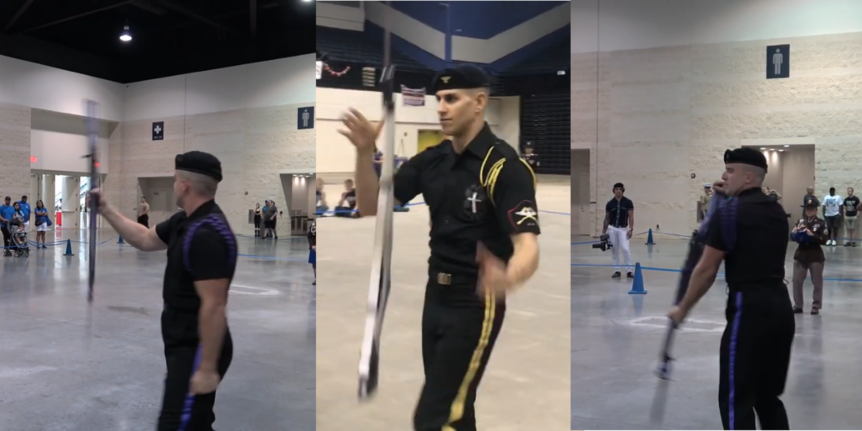
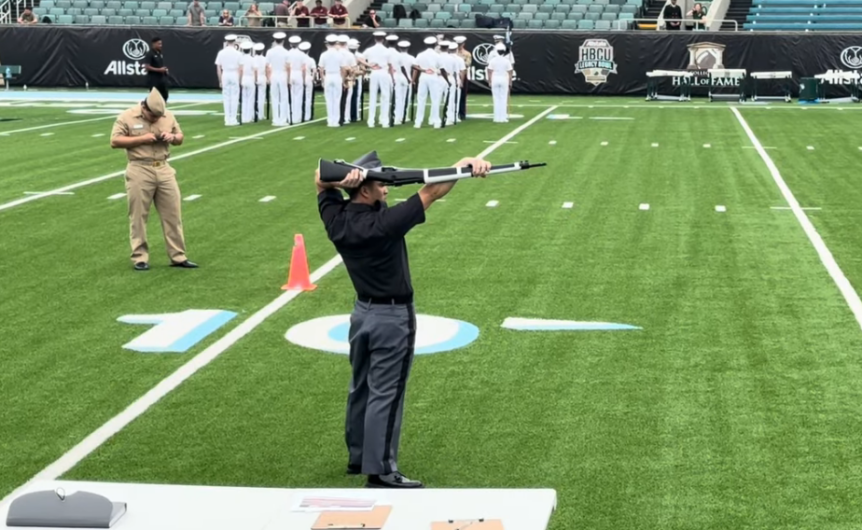
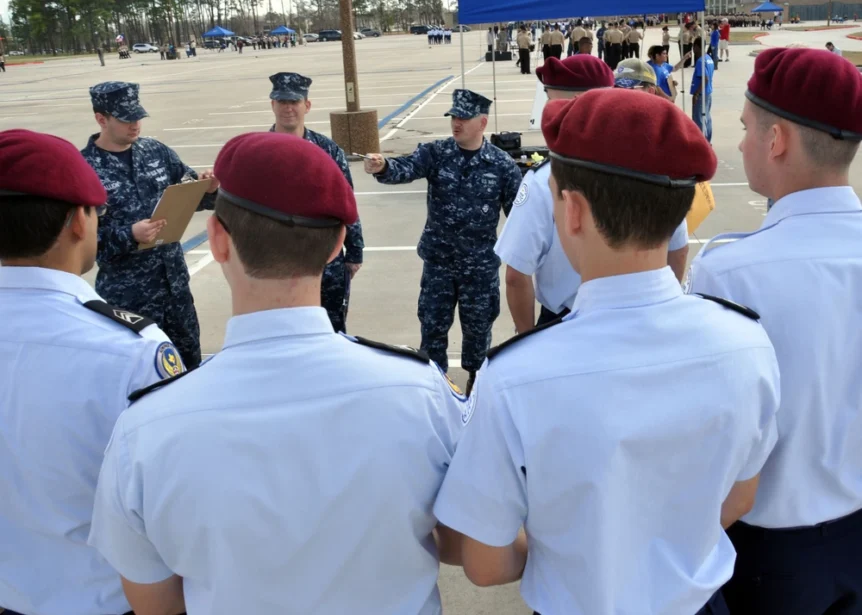
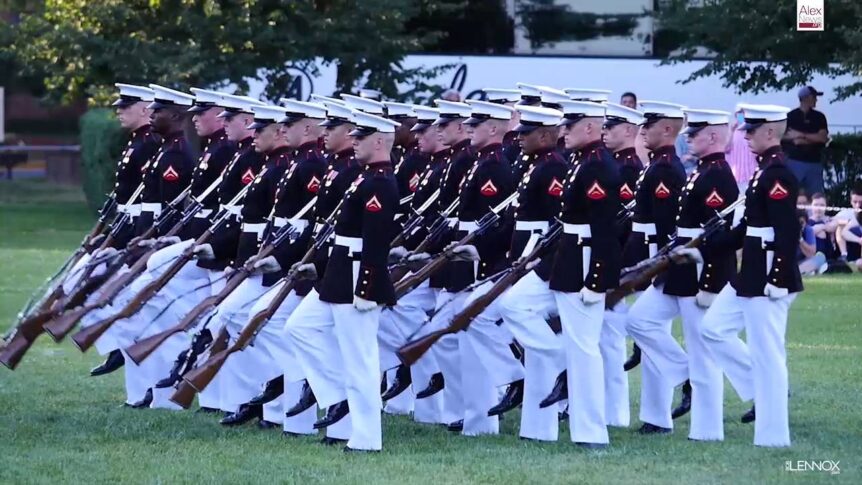
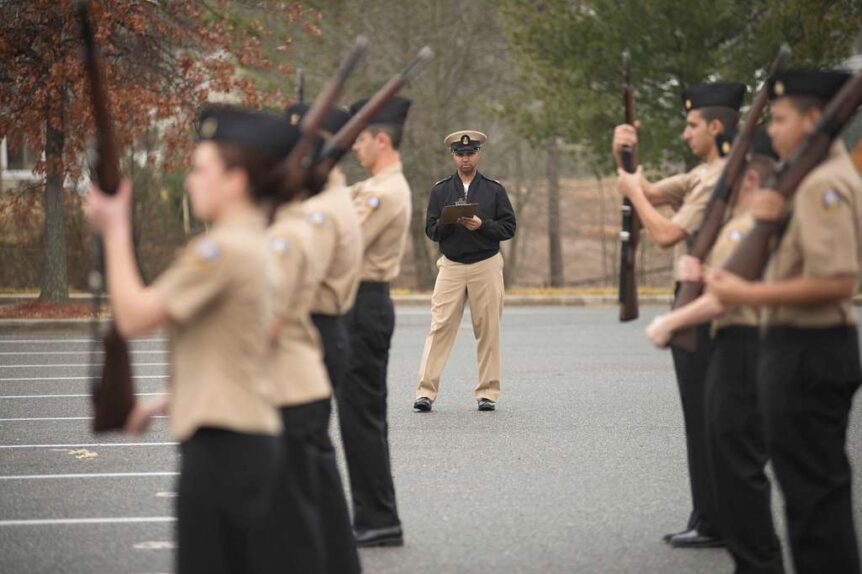
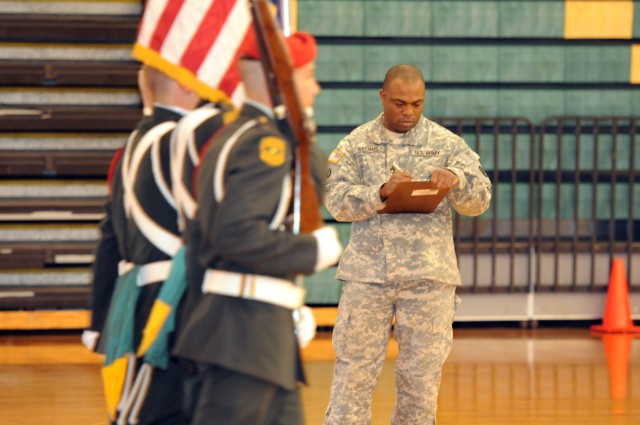
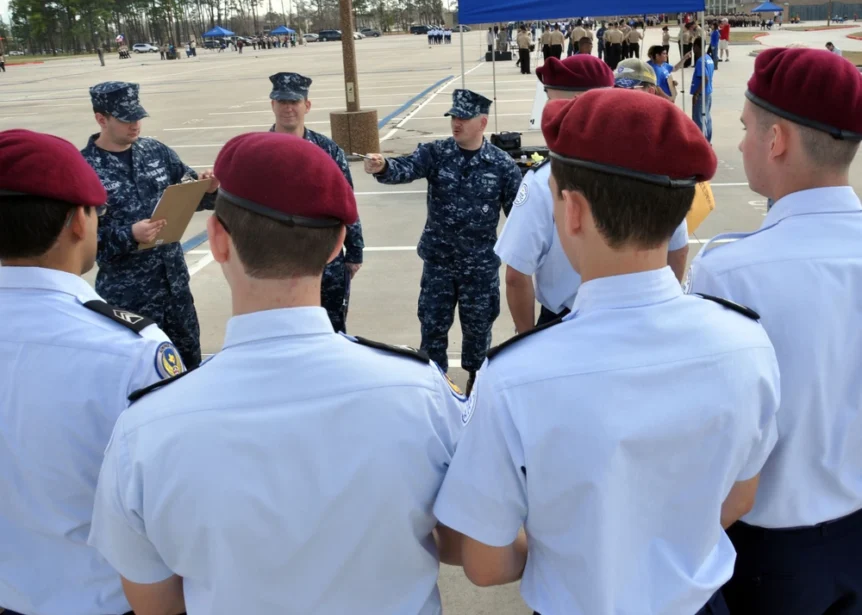
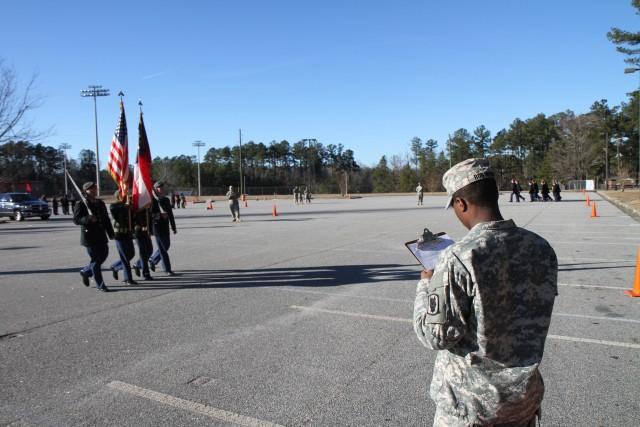
The Joint Service Exhibition Drill Competition held this past weekend brought together the service exhibition drill teams.
When Everything Is Emphasized, Nothing Is: The Failure of Constant Intensity in Ceremonial Performance
A recent parade performance by members of the Guardia Civil of Spain highlights a recurring issue in ceremonial presentation: the belief that increased intensity, applied continuously, improves performance.
Una reciente presentación en desfile por parte de la Guardia Civil pone en evidencia un problema recurrente en la ejecución ceremonial: la creencia de que aumentar la intensidad de forma constante mejora el resultado.
Competitive Timing Logic in Military Drill Performance
INSTITUTE FOR CEREMONIAL STANDARDS Doctrine Clarification Series DCS 20-001 Competitive Timing Logic in Military Drill Performance The Structural “Why” Behind Time Limits Time limits in drill competition are not arbitrary administrative constraints. They are structural safeguards rooted in physiology, motor learning science, program design theory, audience psychology, and adjudication reliability. When timing windows are inflated without structural justification, performance density …
Judge Training Guidance: Evaluating Flight Commander Positioning in Regulation Drill
This guidance provides judges with a consistent framework for evaluating flight (platoon) commander positioning during regulation drill, ensuring assessments are based on published drill standards rather than regional practice, instructor habit, or competitive normalization.
Exhibition Drill Is Not Pageantry
In recent decades, military drill teams—particularly those performing exhibition drill—have increasingly adopted visual elements commonly associated with pageantry arts. Audiences often see this overlap and assume the two are functionally equivalent. They are not.
Pageantry vs. Exhibition Drill — The Essential Difference
Although exhibition drill may borrow tools from pageantry arts, the two are not the same discipline. They differ fundamentally in purpose, authority, design intent, and evaluation philosophy.
Authority to Judge: Why Experience, Rank, and Instruction Do Not Automatically Confer Judging Authority in Drill and Ceremonies
For decades, the military drill and ceremonies community has struggled with a persistent and often unspoken problem: who is actually qualified to judge drill and ceremonies.
For Drill Meet Judges: Why Accent Is Not Excellence in Regulation Drill
Judging regulation drill requires a fundamentally different evaluative lens than judging exhibition or performance-based disciplines. When that distinction is not explicitly defined, even experienced judges can unintentionally reward behaviors that fall outside regulation doctrine. This article clarifies what regulation drill is asking you to evaluate, what it is not, and how to avoid common visual traps that distort scoring. Regulation …
When Standing Out Breaks the Standard: Accent vs. Authority in Regulation Drill
In regulation drill, excellence is not demonstrated by visibility—it is demonstrated by compliance. Yet in competitive environments, a recurring behavior has emerged: teams introduce subtle pauses before flanking movements, exaggerate foot sweeps on facing movements, or add slight timing accents that are not prescribed by doctrine. These additions are often intentional, designed to “stand out” to judges when technical execution …
The Inconsistency of Two Panels of Judges
Time and space. Drill competitions across the country are underway each school year. School campuses are taken over for one day out of the year with different drill decks on various grassy fields, the football field, and even inside the gym and field house.
- Page 1 of 2
- 1
- 2