
INSTITUTE FOR CEREMONIAL STANDARDS
DOCTRINE CLARIFICATION SERIES
ICS DCA 40-000
INSTITUTE FOR CEREMONIAL STANDARDS
DOCTRINE CLARIFICATION SERIES
ICS DCA 40-000
Swords on a Color Guard: Tradition — or Interpretation?
By The DrillMaster
In recent years, I have seen an increasing number of color guards—military, veteran, cadet, and ceremonial—placing swords or sabers in escort positions.
It looks impressive.
It feels historic.
It signals ceremony.
But there is an important question that very few people ask:
Is there historical doctrinal precedent for swords in foot color guard escort positions?
After reviewing every major U.S. drill and ceremonies manual from the Revolutionary War forward, the answer is clear:
No.
That does not make modern units “wrong.”
It does require us to distinguish between documented lineage and modern ceremonial adaptation.
What the Historical Record Actually Shows
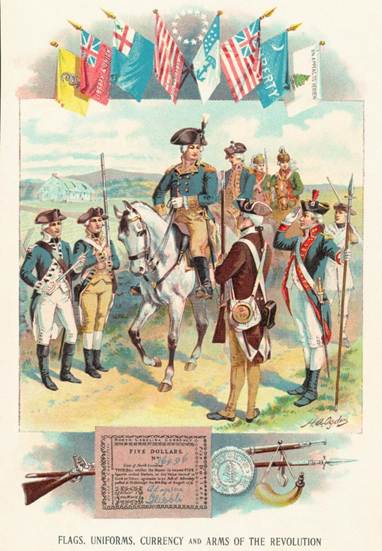
Side note here: the officer saluting Gen. Washington is holding an espontoon in his left hand. Espontoons were a symbol of office. The officers of the Commander’s Guard of the 3rd Infantry Regiment, The Old Guard, in Washington DC arms it’s officers with the weapon and the drum major of the Old Guard Fife and Drum Corps also carries one.

From European linear warfare through early American doctrine:
- The color bearer stood at the center of the formation.
- The color represented the tactical rally point.
- The escort’s job was to defend it.
The escorts were armed with muskets or rifles.
Not sabers.
This structure appears consistently in:
- Baron von Steuben’s 1779 regulations
- Scott’s 1835 Infantry Tactics
- Hardee’s 1855 Rifle and Light Infantry Tactics
- Casey’s Civil War manuals
- War Department Drill Regulations
- FM 22-5
- TC 3-21.5
Across centuries of documented doctrine, there is no authorization for replacing rifle escorts with swords in foot formations.
“But Cavalry Always Carried Sabers”
Yes—mounted cavalry carried sabers.
Charge of the French 4th Hussars
Édouard Detaille (1848 – 1912)
However:
Cavalry doctrine is not infantry doctrine.
Mounted saber tradition does not establish precedent for foot color escort substitution.
When colors were carried in infantry formations, escorts were armed as infantry.
The function was defensive.
The weapon reflected that function.
The Only Historical Sword + Flag Combination
Historically, the only consistent pairing of sword and color occurs when:
- The color was carried by an officer (ensign).
- That officer carried a sword as a matter of rank.
In that configuration:
The sword was personal armament — not a structural escort element.
The escorts remained rifle-armed.
That distinction matters.
What About Modern Authorizations?
United States Marine Corps
The Marine Corps authorizes swords for its mounted color guard under MCO 5060.20.
United States Army
Army cavalry units retain mounted saber traditions.
USS Constitution
United States Navy
Certain heritage Navy units incorporate ceremonial swords.
These are real, lawful, contemporary authorizations.
But they are:
- Limited
- Formation-specific
- Modern ceremonial decisions
They do not establish 18th–19th century infantry precedent.
And they do not create a joint-service doctrinal standard for sword-bearing foot escorts.
Why the Confusion?
Because swords look ceremonial.
To the public:
- A rifle can read as tactical.
- A saber reads as historic.
There is a natural assumption that:
“If it looks more ceremonial, it must be more traditional.”
But historically, the prestige of the color guard did not derive from ornamentation.
It derived from:
- Tactical significance
- Battlefield centrality
- The willingness to die protecting the standard
The rifle symbolized defense.
Changing the arm changes the symbolism.
Why This Matters
This is not about attacking units.
It is not about dismissing authorized adaptations.
It is about precision.
There is a difference between:
- “This is historically rooted.”
- “This is a modern ceremonial interpretation.”
When we blur those categories, we weaken institutional credibility.
When we clarify them, we strengthen it.
The Full Historical Analysis
I have published a formal doctrinal paper and infographic through the Institute for Ceremonial Standards:
ICS DCS 40-000 — Color Guard: The History of the Flag and Sword
ICS DCI 40-000 Color Guard – The History of the Flag and Sword
The paper includes:
- Primary-source citations from 1779 forward
- Comparative doctrinal matrix across centuries
- Service-specific analysis
- Rebuttal of common arguments
- Joint doctrine implications
If you are an instructor, commander, or ceremonial planner, this is required reading before making claims of historical precedent.
You may choose to incorporate swords.
But you should do so with full awareness of what the record does—and does not—support.
Precision matters.
Doctrine matters.
History matters.
Comments 2
What about a ColorGuard utilizing a commander. The commander is not necessarily in the formation. In the Sons of the American Revolution, we typically have the US colors, State Colors, SAR or DAR colors and at least 2 rifle/musket guards. We also have a Commander with sword to command. Would this follow Von Stueben’s rules?
Author
Mr. Humphrey,
Thank you for this great question.
What you describe does not follow von Steuben’s standards. This subject is too important to leave a reply here so I have written an article that will post tomorrow morning with a full explanation.