The Navy does not have protocol specialists assigned to units like the Army, Air Force, and Space Force do. That’s understandable since protocol is not necessary at sea a majority of the time. However, giving this responsibility to a Petty Officer aboard ship as an extra duty without the Navy providing clear guidance is a recipe for problems.
Color Guard Without the Uniform: What Changes—and What Does Not
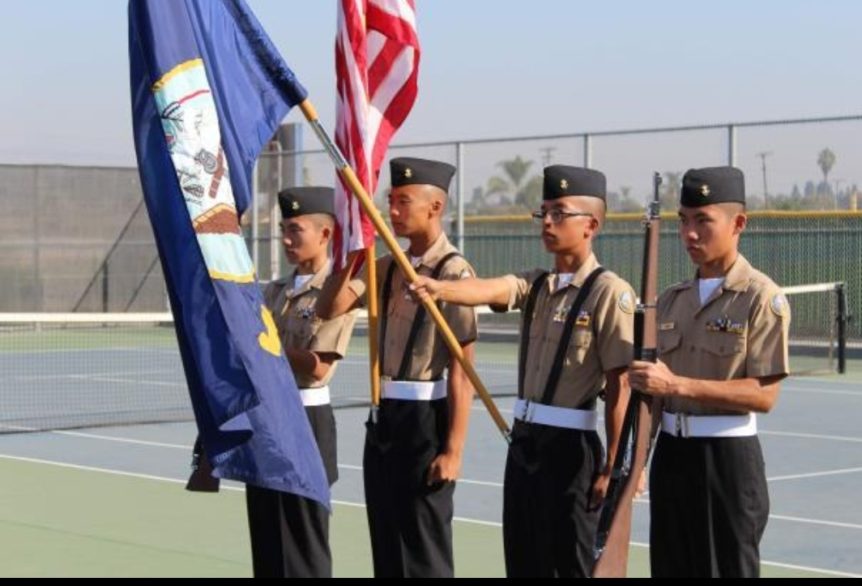
Across the country, cadet programs and organizations are facing a common restriction:uniforms cannot be worn. For many, this has created uncertainty: Let’s be clear: Yes, you can still present the Colors.No, the standard has not changed. The Misconception There is a growing assumption that without the uniform, the rules relax. They do not. The uniform is a supporting element. It …
They’re Not Just Doing It Wrong—They’re Using the Wrong System
In recent years, an increasing number of Air Force color guard performances—particularly within Technical School, the United States Air Force Academy, and Air Force Reserve Officer Training Corps—have shown a consistent pattern: movements that appear deliberate and “ceremonial,” yet are fundamentally incorrect within their training environment.
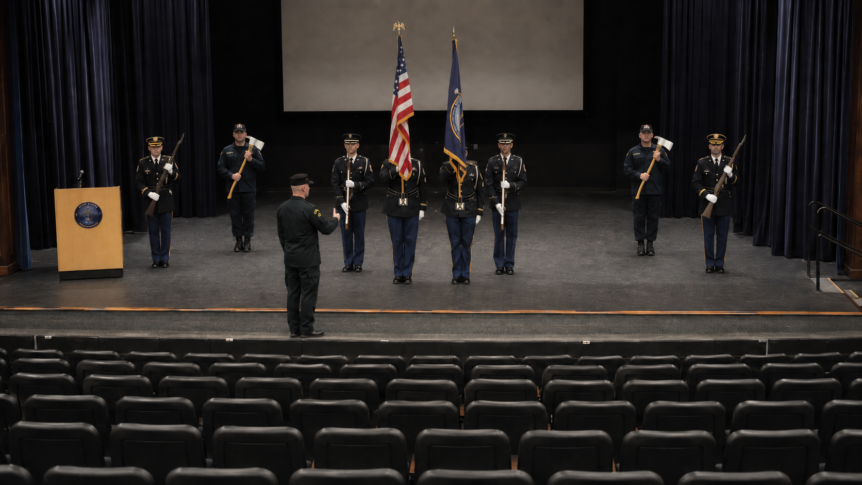
Ceremonial Integrity and Authority — Why Military and First Responder Color Guards Must Remain Separate
This article is written as a thought-leadership piece designed to bridge the gap between respect for first responders and the non-negotiable standards of military protocol. Its goal is not to diminish anyone’s service, but to defend institutional identity and restore ritual integrity in public ceremonies.
The Color Guard Commander: Doctrine, History, and Ceremonial Adaptation
In some organizations, particularly groups like the Sons of the American Revolution (from where I received the question below), it is common to see a “color guard commander” standing outside the formation, often carrying a sword and issuing commands to the guard. This raises a frequent question: Is this practice derived from early American military drill? The short answer is …
The Merchant Marine Academy Battle Standard
Color guards are carefully structured ceremonial formations. Every flag within the formation represents a specific authority: the nation, the foreign nation, the state or territory, a military service, or the organization hosting the ceremony.
Merchant Mariners, Veteran Status, and Color Guard Authority
Public discussion frequently merges two separate realities:
Congressional recognition of World War II Merchant Mariners as veterans and legal and doctrinal authority to form or represent a color guard
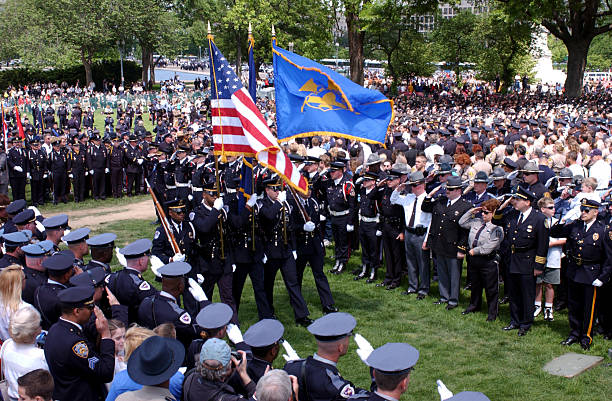
Why DHS Color Guards Lack Doctrinal Uniformity
Joint color guards representing the Department of Homeland Security are increasingly visible at national ceremonies, public events, and major sporting venues. Their presence reflects the broad mission of DHS and the service of its many law-enforcement components.
Color Guard — The History of the Flag and Sword
In recent years, I have seen an increasing number of color guards—military, veteran, cadet, and ceremonial—placing swords or sabers in escort positions.
Why Drift and Ego Are So Prevalent in Drill & Ceremonies
Drift in Drill & Ceremonies is not accidental.
It is not generational. It is not ignorance alone. And it is not simply ego.