
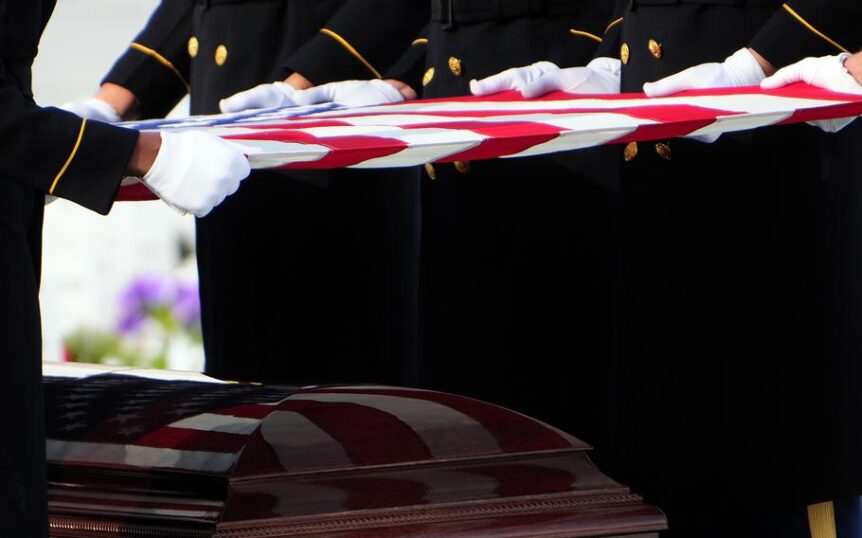
This investigation is grounded in a review of five critical articles from prominent news sources—including Stars and Stripes, NBC News, Washington Post, the American Legion, and NPR—which collectively detail a pattern of failures that constitute a betrayal of trust by Air Force Mortuary Affairs Operations (AFMAO). This historical record highlights instances of mishandled veteran human remains and failed accountability, unequivocally proving that AFMAO has fallen short of its mandated zero margin for error.
This is a follow-up that supports Tuesday’s article, Mission Overreach and Organizational Erosion.
AFMAO’s Desire for Bureaucratic Expansion
As already established. the mission of AFMAO is one of non-negotiable ethical purity, defined by a zero-defect standard for the dignified care of the fallen. However, a review of public reporting—including articles from Stars and Stripes, NBC News, and NPR—reveals that AFMAO’s functional track record is far from flawless, containing instances of mishandled veteran human remains and failed accountability.
This historical context makes AFMAO’s unilateral mission expansion into Base Honor Guard (BHG) program oversight not just an administrative error, but a profound betrayal of institutional priorities and a reckless exposure of the service to catastrophic moral risk.
AFMAO’s primary mission is already complex, emotionally draining, and critical enough that it should command their undivided focus. Their demonstrated history of sensitive mission failures proves they possess neither the operational bandwidth nor the necessary institutional humility to assume responsibility for another, entirely separate mission that the U.S. Air Force Honor Guard (AFHG) has already performed with distinction since the mid-1990s.
Reports in the News
NPR, November 8 and 9, 2011
Summary: Public investigation into operations at the Dover Mortuary (AFMAO HQ) revealed systemic mismanagement and a severe failure to meet the ethical standards of dignity and care for the fallen. The Air Force investigation confirmed two instances in 2009 where portions of human remains were lost, and officials made the unauthorized decision to saw off a Marine’s arm bone to fit the remains into a uniform for viewing, without consulting the family.
Furthermore, the Office of Special Counsel (OSC), an independent federal agency, sharply criticized the Air Force leadership for a “pattern of failure to acknowledge culpability,” disputing the conclusion that no laws or regulations were violated. Discipline against the three senior officials responsible was limited, with none being fired, leading the OSC head to call the Air Force’s explanation for delaying family notification “patently false.” This documented history of gross mismanagement, ethical lapses, and institutional resistance to accountability proves that AFMAO’s core mission—the most sacred and sensitive in the Department of Defense—is complex enough to overwhelm its existing leadership and resources. Consequently, any assertion of authority over the distinct, time-intensive mission of Base Honor Guard ceremonial standards constitutes an unacceptable risk that threatens to compound failure and further erode institutional trust. Read the article at this link.
Summary: This reporting consolidates evidence of catastrophic ethical and administrative failures at the Dover Mortuary (AFMAO), spanning from 2003 to 2010. Key findings include the systemic, undisclosed practice of sending cremated portions of military remains to a Virginia landfill for five years (2003-2008), the loss of remains on two occasions in 2009, and the unauthorized mutilation (sawing) of a Marine’s remains in 2010.
Crucially, the subsequent Air Force investigation resulted in minimal discipline (“gross mismanagement” but no firings), and the independent OSC issued a critical report, accusing the Air Force of a “pattern of the Air Force’s failure to acknowledge culpability.” This historical record demonstrates a clear and consistent inability by AFMAO leadership to maintain the ethical and legal standards required for their primary, zero-defect mission.
An organization with this documented pattern of failure, resistance to external accountability, and lack of institutional humility is fundamentally incapable of taking on the additional, specialized mission of Base Honor Guard ceremonial standards. AFMAO’s policy expansion, therefore, represents an unacceptable moral hazard to the integrity of the Air Force. Read the article at this link.
Washington Post, November 9, 2011
Summary: This public revelation exposes a profound ethical failure at the Dover Mortuary (AFMAO) between 2003 and 2008, where portions of the remains of deceased troops were cremated and subsequently disposed of in a Virginia landfill. Critically, this deeply dishonorable practice was carried out without the knowledge or consent of the families of the fallen Service Members.
This betrayal of trust, concerning the final disposition of America’s heroes, represents the ultimate breach of the zero-defect standard and the ethical commitment established by DoDD 1300.22. The fact that AFMAO operated with such a reckless disregard for dignity, concealment, and accountability in its primary, non-negotiable mission confirms it lacks the institutional integrity required to assume oversight of the Base Honor Guard program. Any assertion of authority over the ceremonial mission by an organization with this specific history of ethical compromise presents an unacceptable moral hazard to the entire Air Force. Read the article at this link.
Here is a link to the Office of Special Counsel’s report of AFMAO entitled, Analysis of Disclosures, Agency Investigation and Reports, and Whistleblower Comments OSC File Nos. DI-10-2151; DI-10-2538; and DI-10-2734, in PDF.
Stars and Stripes, March 3, 2019
Summary: This piece of evidence is extremely powerful. The Armed Forces Medical Examiner System (AFMES)—collocated with AFMAO at Dover—is a direct sister organization. Its failures directly implicate the competence of the entire specialized technical community.
The Pentagon’s Inspector General (IG) report on the AFMES exposes a catastrophic breakdown in basic ethical and administrative controls over a 16-year period (2006–2022). AFMES, the DoD’s primary forensic investigative service, was found to have severely mishandled retained organs and human tissue collected during autopsies.
The failures cited by the IG are systemic and damning:
- Failed Consent: For 91% of the cases studied, families were never told that their relative’s organs were retained.
- Disregard for Wishes: When disposition instructions were provided by next-of-kin, officials failed to follow them 41% of the time.
- Administrative Chaos: Organs were tracked poorly, lacked clear disposition policies, and in one reported case, a heart was tragically misidentified as a brain.
The IG warned that this mismanagement causes extreme “emotional distress” for military families who had planned for the burial of these remains. This final evidence, alongside the AFMAO (loss/landfill), JPAC (“Big Lie”), and DPAA (mutilated flag) reports, conclusively proves that the entire community of technical-focused agencies—AFMES, AFMAO, and DPAA—is incapable of upholding the “zero margin for error” required for their sacred mission. This pattern confirms that their focus on technical and forensic challenges creates an institutional environment fundamentally unfit to manage the specialized, protocol-driven mission of the Base Honor Guard program. Read the article at this link.
NBC News, October 10, 2013
This article focuses on Joint POW/MIA Accounting Command (JPAC), which is the predecessor agency to the modern Defense POW/MIA Accounting Agency (DPAA or DoDPAA).
A slight Detour to DPAA.
Here is a link to my article on the DPAA and it’s use of mutilated flags. Read the article at this link.
This is a devastating current piece of evidence. The use of mutilated flags is an immediate and visible breach of sacred ceremonial protocol and flag etiquette. This confirms that the lack of attention to ceremonial standards is an ongoing, systemic problem within technical-first agencies like DPAA, reinforcing the case against AFMAO.
Current operations at the Defense POW/MIA Accounting Agency (DPAA)—the successor to JPAC and operating under the same ethical mandate as AFMAO—further validate the institutional hazard of allowing technical agencies to manage ceremonial protocol. The documented practice of using mutilated flags (flags that are sewn together to fit a casket snugly instead of being secured by a casket band) is a direct and ongoing violation of ceremonial standards and the US Flag Code.
This institutional disregard for protocol confirms that agencies focused on the technical complexity of remains handling and identification (DPAA and, by extension, AFMAO) prioritize operational expediency over ceremonial integrity. This pattern demonstrates that they possess a profound institutional blind spot for the non-negotiable standards of military honors. Allowing AFMAO to control the Base Honor Guard program introduces an unacceptable risk that the AFHG’s hard-won standards of ceremonial perfection will continue to be compromised by technical leadership that consistently fails to uphold the sanctity of protocol.
Back to the NBC article.
While JPAC is not AFMAO, the report is essential to this argument because:
- It is about an agency operating under the same ethical mandate (DoDD 1300.22) as AFMAO.
- It reveals a history of deception and compromised standards in another, separate mission related to honoring the fallen, reinforcing the idea that DOD agencies dealing with remains often prioritize public relations over ethical execution.
- The reference to “The Big Lie” and “phony arrival ceremonies” is the most powerful evidence of ceremonial fraud.
Summary: This institutional precedent of deception in ceremonial duty proves why specialized ceremonial standards must remain isolated from technical mortuary/accounting agencies.
This investigative report into the Joint POW/MIA Accounting Command (JPAC)—an agency operating under the same ethical framework as AFMAO—exposes a profound institutional betrayal labeled internally as “The Big Lie.”
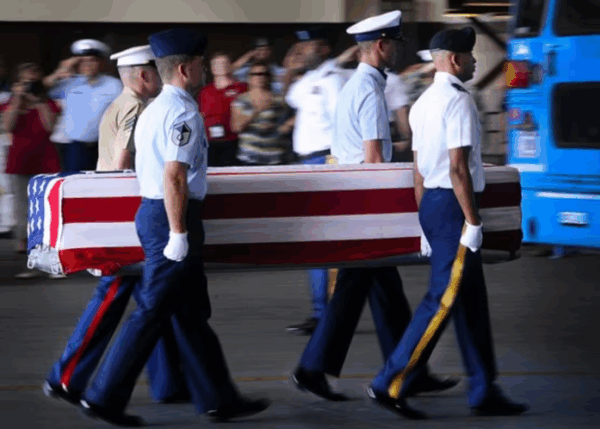
For seven years, JPAC staged arrival ceremonies at Joint Base Pearl Harbor-Hickam, complete with honor guards, flag-draped cases, and dignitaries, leading the public, veterans, and MIA families to believe newly recovered war dead were arriving. In reality, the transfer cases contained remains already stored in a lab, and the aircraft were often non-functional and towed into place.
This pattern of deception and fabrication in a sacred ceremonial duty proves that agencies whose primary focus is the technical (identification, recovery, or mortuary science) are willing to compromise ceremonial integrity for the sake of public relations. This incident provides critical context for the current policy failure: it confirms that AFMAO’s mission expansion into Base Honor Guard oversight is not just administrative overreach, but a dangerous precedent. It allows an organization with zero core competency in ceremonial standards—and one that must prioritize complex technical challenges—to gain control over a high-profile, high-risk ceremonial mission, resulting in an unacceptable moral and public affairs hazard for the entire Air Force. Read the article at this link.
Conclusion of the NBC article section: The Unacceptable Moral Hazard
The combined evidence from AFMAO’s mismanagement, DPAA’s protocol breach, and JPAC’s ceremonial fraud establishes a devastating pattern across the entire mortuary functional community. Allowing AFMAO to control the Base Honor Guard program introduces an unacceptable moral and institutional risk. Its technical focus guarantees the continuing compromise of the AFHG’s hard-won standards of ceremonial perfection, threatening to further erode the public trust in the Air Force’s most sacred mission.
The American Legion, 2025
Summary: The deceptive practices at JPAC were met with swift and authoritative condemnation by the American Legion, one of the nation’s largest veteran service organizations. The Legion’s leadership declared that the staged “arrival ceremonies” were “deceptive, not symbolic,” asserting that the practice—known as “The Big Lie”—”misleads and insults the living” during a time of immense vulnerability for military families.
This response is critical to the argument against AFMAO’s mission creep for two reasons:
- Ethical Credibility: It proves that organizations focused on the technical aspects of remains-handling are prone to prioritizing public relations over ethical execution, as they are willing to fabricate ceremonial moments.
- Systemic Dysfunction: The Legion’s call for reform aligns with the Government Accountability Office (GAO) findings that JPAC was already “dysfunctional” and “inefficient.”
If AFMAO’s sister agency, dedicated to the same DoDD 1300.22 mandate, is publicly exposed as institutionally dishonest about honors and is simultaneously failing at its core mission, it conclusively demonstrates that the entire functional community lacks the necessary institutional integrity and zero-defect focus to assume authority over the separate, specialized, and non-negotiable standards of the Base Honor Guard. Read the article at this link.
Conclusion: The Institutional Cost of Ethical Dereliction
The evidence is conclusive and damning: Air Force Mortuary Affairs Operations (AFMAO) is institutionally unfit for any mission beyond the highly specialized, zero-defect standard of dignified remains recovery and processing.
The pattern of failure documented across AFMAO, its co-located partner AFMES, and its sister agency DPAA (formerly JPAC) reveals a functional community compromised by ethical corrosion, systemic administrative chaos, and a profound disregard for non-negotiable ceremonial protocol.
The history is clear: AFMAO lost portions of the fallen, discarded American heroes into a Virginia landfill for half a decade, and enabled the unauthorized alteration of remains. At the same time, its brethren agencies misled the public with “The Big Lie” of staged ceremonies and actively violated the Flag Code with mutilated flags. These are not isolated administrative errors; they represent a fundamental, organizational failure to maintain the moral authority required for sacred duty.
The mission of the Base Honor Guard is one of visible, non-negotiable perfection, maintained only through dedicated specialization. AFMAO’s decision to unilaterally seize program oversight was not merely an act of bureaucratic mission creep; it was an act of institutional arrogance that recklessly exposed the entire Air Force to a catastrophic moral hazard. An organization that has repeatedly failed to secure the remains of the fallen and violated the sanctity of military protocol is incapable of safeguarding the integrity of the nation’s final military salute.
The time for policy negotiation is over. The only realistic response to this documented systemic failure is immediate, non-negotiable reversal. AFMAO must be stripped of all ceremonial oversight authority, and the leadership at both AFMAO and the culpable OPR, AF/A3, must face the fullest extent of accountability for the resultant breakdown of good order, discipline, and the betrayal of trust with the American public and veteran community.
The Call for External Accountability
The historical record confirms that the mortuary community cannot self-police. The initial Air Force investigation into the Dover scandals was sharply contradicted by the Office of Special Counsel, which accused Air Force leadership of failing to acknowledge culpability. Therefore, the only viable path to reform is an immediate, external intervention.
We demand a Government Accountability Office (GAO) audit of the entire mortuary and ceremonial chain of command to assess compliance with the Congressional mandate and a comprehensive investigation by the DoD Inspector General into the organizational culture that allowed these patterns of ethical and administrative failure to persist for over a decade.
The solution is not complex, but it requires institutional humility. All organizational ambiguity must end. The US Air Force must formally and permanently designate the U.S. Air Force Honor Guard as the sole office of primary responsibility for all Base Honor Guard management, policy, and training standards. AFMAO’s administrative role must be strictly limited to the necessary functions of a Functional Manager for technical mortuary input alone. This is the only way to safeguard the integrity of the ceremonial mission and ensure that the AFHG’s specialized expertise can once again operate with the zero margin for error that our fallen heroes and their families deserve.