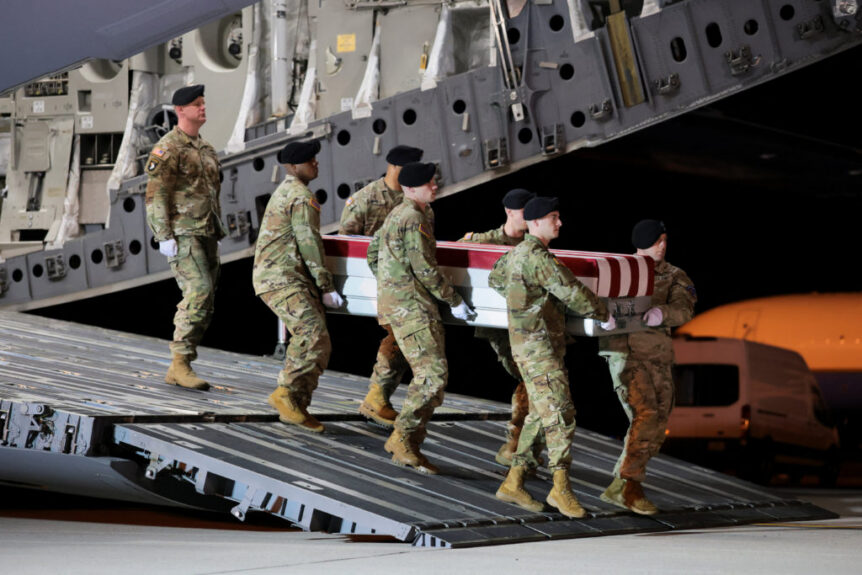
Military mortuary movements have specific meanings. The words matter because they identify different parts of the process, different locations, and different responsibilities. When people blur these terms together, they may think they are adding dignity, but they are actually creating confusion. The dignity is already present. It does not need inflated terminology.
The Angel Flight
An Angel Flight is commonly used to describe the flight bringing a deceased military member from overseas to Dover Air Force Base, Delaware. More precisely, this is the movement of the fallen from the theater of operations back to the United States. Air Force Mortuary Affairs Operations states that the sequence begins with the fallen being returned to Dover AFB by the most expedient means possible, often through Ramstein Air Base, Germany. Once the aircraft arrives at Dover, the remains are removed from the aircraft in a transfer case and moved to an awaiting transfer vehicle.
This term should not be casually applied to every aircraft movement involving a casket. There is no “Angel Flight” every time a deceased military member is flown home on a civilian aircraft. There is also no special ceremonial name for a civilian airline flight simply because a casket is in the cargo hold. The presence of human remains does not rename the flight.
The Dignified Transfer
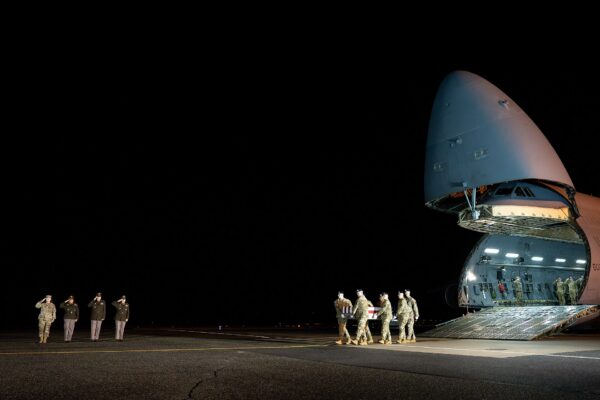
A Dignified Transfer is not the entire journey home. It is the solemn movement conducted at Dover Air Force Base when the transfer case is removed from the arriving aircraft and placed into ground transportation for movement to Air Force Mortuary Affairs Organization. AFMAO specifically defines a dignified transfer as the process by which, upon return from the theater of operations to the United States, the remains of fallen military members are transferred from the aircraft to an awaiting vehicle. AFMAO also makes an important clarification: the dignified transfer is not a ceremony, but a solemn movement of the transfer case by a military carry team from the fallen member’s service.
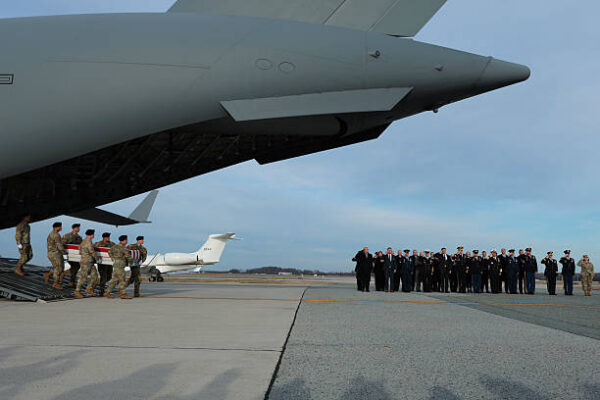
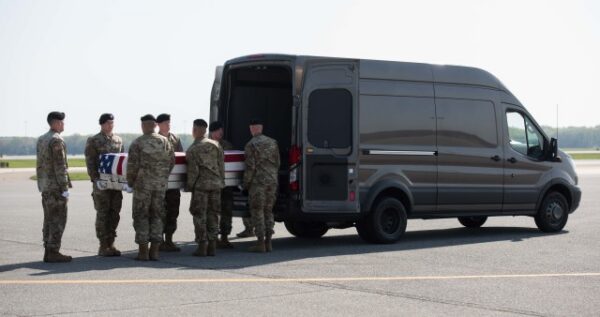
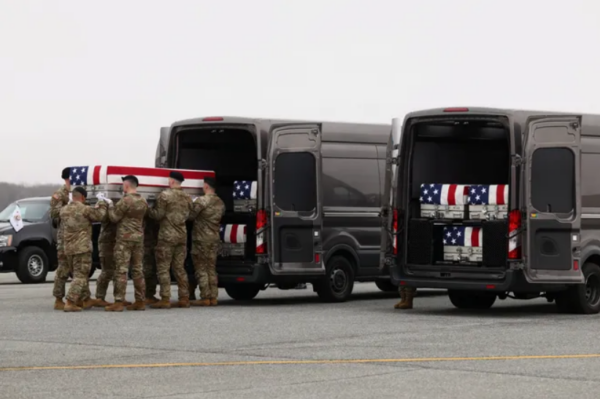
That distinction matters. The Dignified Transfer is tied to Dover AFB, AFMAO, the transfer case, the service-specific carry team, and the movement into the mortuary affairs process. After the transfer vehicle departs the aircraft area, the remains are taken to the mortuary facility for positive identification and preparation for return to the family.
A related problem is the casual insult some people use for the awaiting transfer vehicles at Dover, calling them “Amazon vans” or similar names as a way to mock government officials or the process. That insult misses the mark entirely. The vehicle is not the point. The mission is the point. The transfer vehicle is part of the solemn chain of custody that moves the fallen from the aircraft to Air Force Mortuary Affairs Operations. Mocking that vehicle does not merely insult a political figure or agency; it insults the military personnel, the mortuary affairs mission, the carry team, the fallen member(s), and the process established to return that service member with dignity.
The Dignified Transfer does not require theatrical equipment to be reverent. It requires disciplined personnel, proper procedures, controlled movement, and respect for the remains. The transfer vehicle is a functional part of that process, not a prop for public approval. Reducing it to a cheap insult reveals a lack of understanding of what is taking place on the flight line.
Planeside Honors
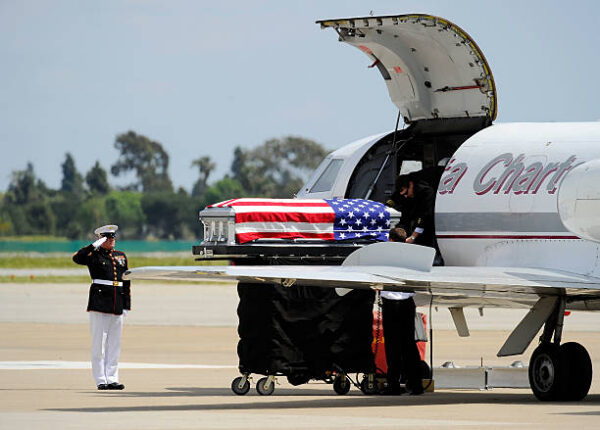
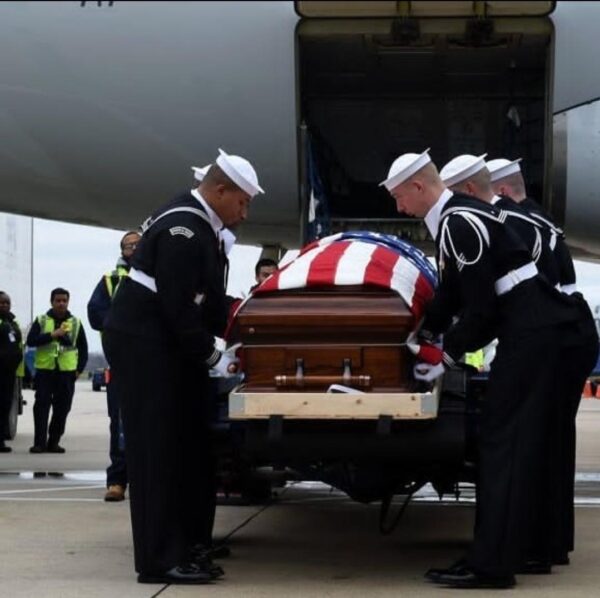
This is probably the most confused ceremony. Planeside Honors are different. Planeside Honors occur at three separate times at the aircraft:
- When a casket is being loaded onto a civilian aircraft
- When it is transferred from one aircraft to another
- When received at the final destination and moved from the aircraft to an awaiting coach.
These honors may involve a single military escort, a casket carry team, family presence, local unit support, and sometimes media coordination, but Planeside Honors are not a Dignified Transfer unless they are part of that specific AFMAO arrival process.
The term appears in official military public affairs usage for remains returning to a location other than Dover. For example, the Colorado National Guard announced planeside honors at Buckley Air Force Base for Chief Warrant Officer David R. Carter when his remains returned there before memorial and burial services. That is the correct kind of usage: honors rendered planeside at the receiving location, not a rebranding of the entire flight.
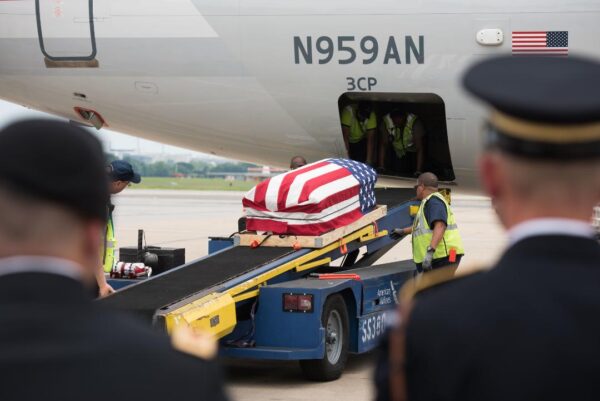
The Role of Airline Ground Crews
Planeside Honors often depend on more than the military carry team. Airline ground crews, airport operations personnel, cargo handlers, ramp supervisors, and customer service representatives frequently do a great deal of unseen work to ensure the movement is handled correctly. They coordinate timing, aircraft access, equipment placement, ramp safety, family positioning, escort movement, and communication between the airline, the military team, airport officials, and the funeral home.
Their work matters. The military team may be the visible ceremonial element, but the ground crew often creates the conditions that allow the honors to be rendered properly. Without their coordination and professionalism, the movement can become rushed, awkward, unsafe, or disorganized. When the process goes well, it is often because people behind the scenes took the mission seriously.
Many airline employees who support these movements are veterans themselves, family members of service members, or people who simply understand the solemnity of the moment. At times, airline ground crews form their own respectful teams. Some render salutes. Some position flags. Some stand silently at attention as the casket is moved. These actions are not a replacement for military honors, nor do they rename the movement. They are voluntary acts of respect offered by people who recognize that a fallen service member, veteran, or deceased passenger is being entrusted to their care for a short but important part of the journey, and this respect is appreciated immensely.
Those efforts should be acknowledged. The correct terminology still matters, but so does recognizing the people who help preserve the dignity of the movement. Planeside honors are strongest when the military team, airline personnel, airport staff, first responders, and funeral professionals understand their roles and work together without trying to turn the moment into something it is not.
The Reverse Dignified Transfer
There is also a related Dover departure process sometimes called a reverse dignified transfer. AFMAO has used that term for the movement of the fallen from Dover for departure to the final destination. One AFMAO feature describes contracted aircraft carrying the remains and military escort to a local airport near the final resting place as part of the reverse dignified transfer process. Another AFMAO article explains that the fallen “leave as reverently as they arrive” and that a reverse dignified transfer is conducted as the remains depart Dover.
That does not mean every later aircraft movement becomes an Angel Flight or a Dignified Transfer. The terminology remains tied to the specific process.
The Clean Distinction is:
- Angel Flight: the colloquial term for the flight bringing the fallen from overseas to Dover AFB. Only.
- Dignified Transfer: the solemn movement at Dover AFB from the arriving aircraft to the transfer vehicle for movement to AFMAO. Only.
- Reverse Dignified Transfer: the Dover departure movement from AFMAO to the aircraft or vehicle for final transportation.
- Planeside Honors: honors rendered at an aircraft when a casket is loaded, transferred, or received and moved to the awaiting coach at the final destination.
- Civilian airline flight carrying a casket: a civilian airline flight carrying a casket. It does not receive a special ceremonial title.
The problem is not sentiment. The problem is careless terminology. Families, escorts, military units, airport personnel, funeral directors, and the public all benefit when the language is accurate. Calling everything an “Angel Flight” or a “Dignified Transfer” may sound moving, but it strips those terms of their specific meaning.
Honor does not come from dramatic language. Honor comes from precision, discipline, and reverent execution. The fallen deserve correct terminology just as much as they deserve correct ceremony.