
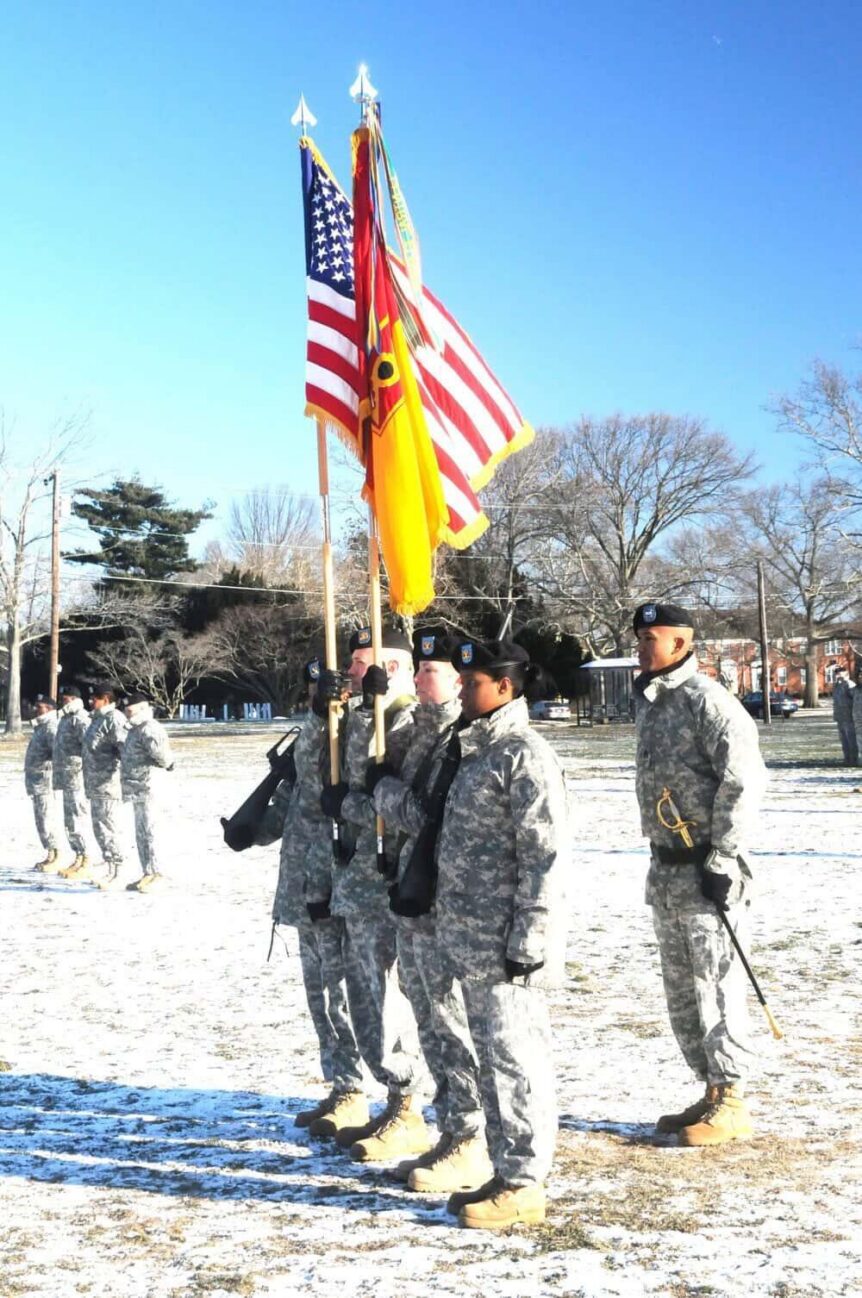
When it comes to the color guard, there’s a persistent belief that refuses to go away:
“The Command Sergeant Major—the one with the sword—is the commander of the color guard at any time and for any ceremony.”
It sounds right. It looks cool. It is not supported by doctrine.
Let’s go to the source: TC 3-21.5 Drill and Ceremonies.
Start with the Baseline: Who Actually Commands the Color Guard?
In standard execution—marching, halting, posting, retiring—the answer is simple:
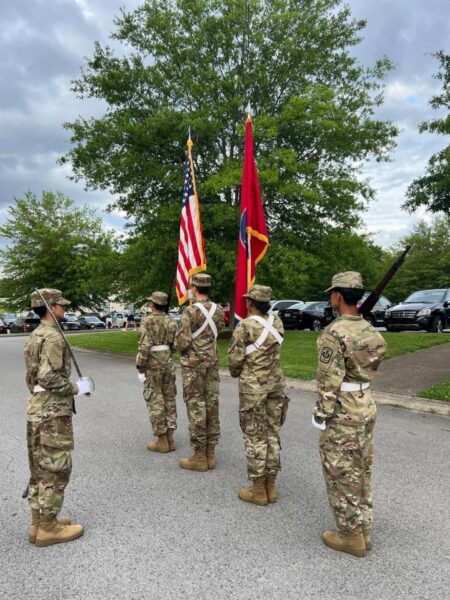
15-13. The Color guard consists of two (three) sergeants and two specialists or privates. It is an honor to be selected as a member of the Color guard. The senior (Color) sergeant carries the national Color and commands the Color guard. The senior (Color) sergeant gives the necessary commands for the movements and for rendering honors.
The Color Sergeant commands the color guard.
That’s the default. That’s the structure. That’s what keeps the element functional and consistent across ceremonies. If nothing else is specified, the Color Sergeant is in charge.
So Where Does the CSM Fit?
This is where people start to blur roles.
The CSM is:
- A senior enlisted leader
- A ceremonial authority
- Positioned outside the element, typically centered on the Colors at the rear of the formation
But none of that automatically makes the CSM the commander of the color guard.
Doctrine assigns authority by situation, not by presence.
Yes—the CSM Does Command… Sometimes
There is one very clear example where the CSM commands the color guard directly:
Casing and Uncasing the Colors (TC 3-21.5, para 15-20)
In this procedure, the CSM:
- Positions six steps in front of the formation
- Issues commands like:
- Sling, ARMS
- POST
- Present, ARMS
- Order, ARMS
- Directs: UNCASE THE COLORS
That’s real command authority.
But here’s the part most people miss:
If the CSM is not present, the senior Color Sergeant gives the commands.
That tells you everything you need to know.
This authority is:
- Temporary
- Procedure-specific
- Not permanent
And Sometimes the CSM Doesn’t Command at All
There are ceremonies where the CSM is heavily involved—but does not command the color guard. For example:
Deactivation Ceremonies (TC 3-21.5, para 10-42)
In this case, the CSM:
- Removes the organizational Color from the bearer
- Presents it to the commander
- Cases the Color
- Transfers it to another authority
That’s not command of the color guard.
That’s: Ceremonial control and handling of the Color itself
The distinction matters.
And Sometimes Someone Else Commands
Now we add another layer.
Receiving or Dismissing the Colors (TC 3-21.5, para 15-23)
Here:
- The company commander gives:
- Present, ARMS
- Order, ARMS
- The color guard executes based on those commands
So now we have three different realities:
- Color Sergeant commands (default)
- CSM commands (specific procedures)
- Company commander commands (specific procedures)
That Means One Thing
There is no permanent, universal commander of the color guard outside the element itself.
Command authority is:
- Assigned
- Situational
- Defined by the ceremony
What About Dining-Ins and Formal Events?
TC 3-21.5 includes a note that procedures may vary when the CSM oversees the Colors during a formal dining-in.
That word matters.
“Oversees” does not mean “commands everything.”
It means:
- The CSM may coordinate
- The CSM may cue actions
- The structure may adjust
But it does not establish automatic command authority.
The Real Problem: The “Sword Commander” Myth
The visual is powerful:
- Senior NCO
- Sword
- Positioned front and center
So people assume:
“That must be the commander.”
But doctrine doesn’t work that way.
Authority comes from assigned procedure, not appearance.
The Correct Way to Think About It
Here’s the clean model:
Default
- Color Sergeant commands
Assigned (Specific Procedures)
- CSM commands (casing/uncasing/posting colors at formal dinners)
- Company commander commands (receiving/dismissing)
Ceremonial Role (Non-Command)
- CSM handles or oversees in certain ceremonies
Why This Matters
When you misunderstand this structure, you get:
- Extra people inserted into the formation
- Conflicting commands
- Broken timing and execution
- A color guard that looks unsure instead of precise
And ultimately:
You lose the authority and clarity that the Colors are supposed to represent.
Bottom Line
The Command Sergeant Major is:
- A critical ceremonial authority
- A visible leader in key moments
But:
The CSM is not the standing commander of the color guard.
Command belongs to:
- The Color Sergeant by default
- Others only when doctrine explicitly assigns it
Download the Standard
For a full doctrinal breakdown, including authority models and application guidance:
Download: ICS DCS 12-020 Command Authority and the Role of the CSM in Relation to the Color Guard