Senior Pentagon reporter Jeff Schogol recently published an excellent piece at Task & Purpose1 detailing the restructuring of U.S. Air Force Basic Military Training (BMT). The article focuses on modernization, but two particular aspects stand out because they directly reinforce something I have taught for years: drill and ceremonies are not cosmetic traditions — they are functional training tools with real-world application.

From Custody to Choreography: How Authority Shaped—and Split—the Color Guard
For many people involved in military drill, ceremonial color guards, marching band, or drum corps, one question keeps resurfacing: How did we all start in the same place—and end up speaking completely different languages about flags, rifles, and sabers? The answer is not stylistic. It is structural. It is a story about authority—where it came from, where it went, and …
“Praise in Public”: The Case for Public Correction
Not long ago, I received a private message from a high-ranking officer (O-6). See my “Stupid People” article. While I’ve received variations of this question before, his direct inquiry provided the perfect opportunity to address a recurring issue. The image above was generated for me by Gemini. It’s supposed to be of a disappointed senior leader. Notice the fringe on …
Navigating Leadership: A Cadet’s Guide When Adult Support Falls Short
You’ve heard the message: Dismissiveness hurts. When you bring a real problem or an idea to an adult leader and their response is a dismissive comment—or worse, “I don’t care”—it’s frustrating, unfair, and makes you question why you should even try. First, know this: You are heard, and your concerns are valid. Your initiative is vital to our program. You …
The USNSCC Honors and Ceremonies Course
Over the years, adult volunteers have done their best to provide information to Sea and League Cadets regarding US Navy honors and ceremonies. In this article, I will attempt to convey to you why this course is important for every Sea and League Cadet.
Motivation, Legitimacy, and Instructor Presence in Cadet Drill Programs
“A soldier will fight long and hard for a bit of colored ribbon.”Napoleon Bonapart Napoleon’s observation remains relevant because it identifies a fundamental truth of military culture: recognition matters. Ribbons, medals, badges, cords, and other uniform distinctions are not superficial. They are visible acknowledgments of effort, competence, and commitment. They communicate, without explanation, that an individual or group has earned …
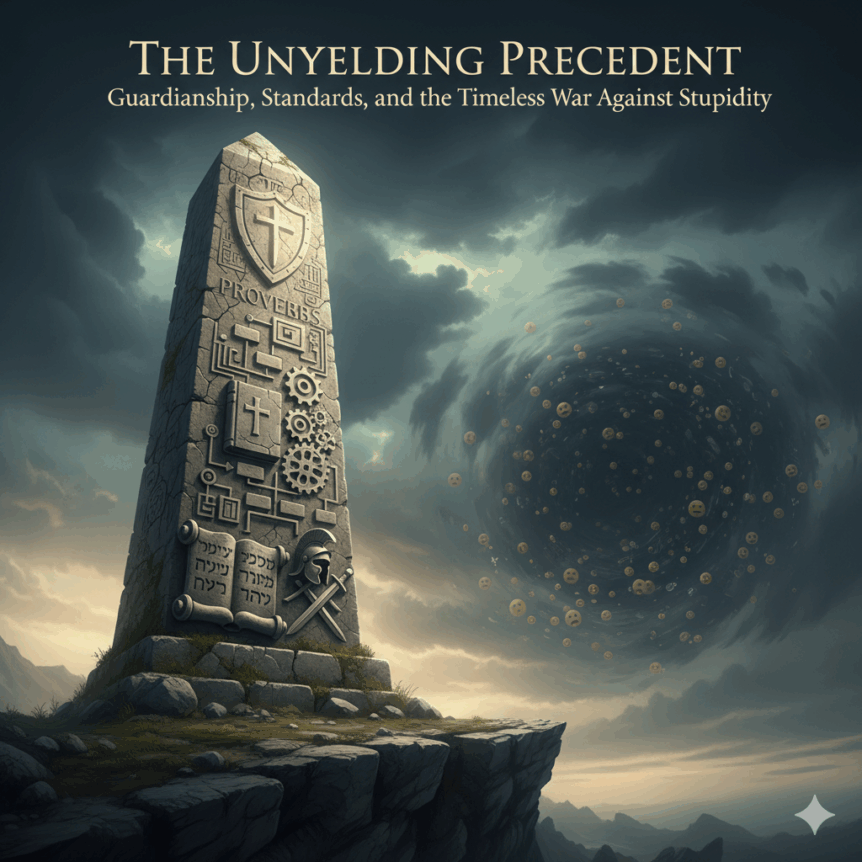
4 of 4 The Unyielding Precedent: Guardianship, Standards, and the Timeless War Against Stupidity
The first three installments established the analytical imperative (Cipolla), the ethical guardrails (Scripture/Stoicism), and the strategic mandate (Negentropy). This final article completes the foundation, demonstrating that the need to guard standards and warn against irrationality is not new—it is a central, continuous theme across military, philosophical, and wisdom traditions spanning millennia.
3 of 4: The Second Law of Thermodynamics, Stupid People, and The DrillMaster
I asked AI and we created a further explanation in this series. I posited the question, “Does entropy have a role in Cipolla’s model?” The answer was: While there is no recognized physical or statistical quantity called “social entropy,” the concept of entropy provides a near-perfect metaphor for the destructive, corrosive force that Carlo M. Cipolla assigned to “stupid people.” …
2 of 4: Mastering the Madness: An Ethical and Intellectual Strategy Dealing with Stupid People
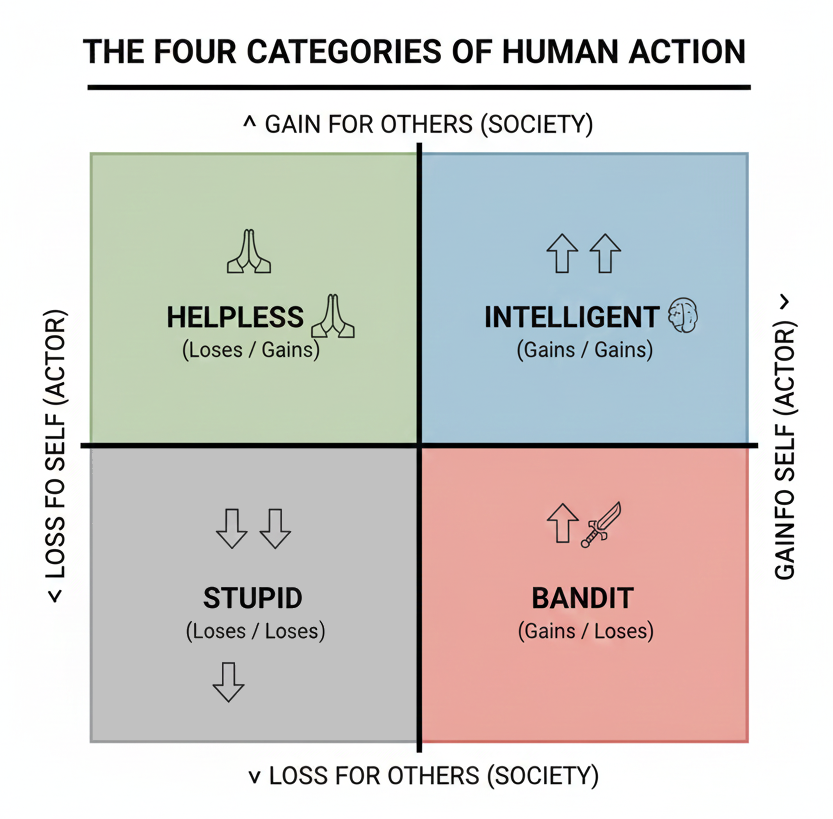
The first installment established that the greatest threat to success is the stupid action—behavior that causes pure, uncompensated net loss to a system. It also laid the analytical groundwork (Cipolla’s Laws) and the ethical foundation (Scripture’s warning against contempt). This second installment is the call to action. We now translate theory into practice, detailing how to deploy a unified, three-part …
1 of 4: The Five Laws of Human Stupidity and Scripture
Every functioning system—from a military unit to a multinational corporation—is ultimately challenged by actions that defy logic: actions taken by stupid people causing loss with no rational benefit to anyone. This article lays the groundwork for understanding this challenge by synthesizing two powerful pieces of information. First, we look at economic historian Carlo M. Cipolla’s explanation of his five laws …