
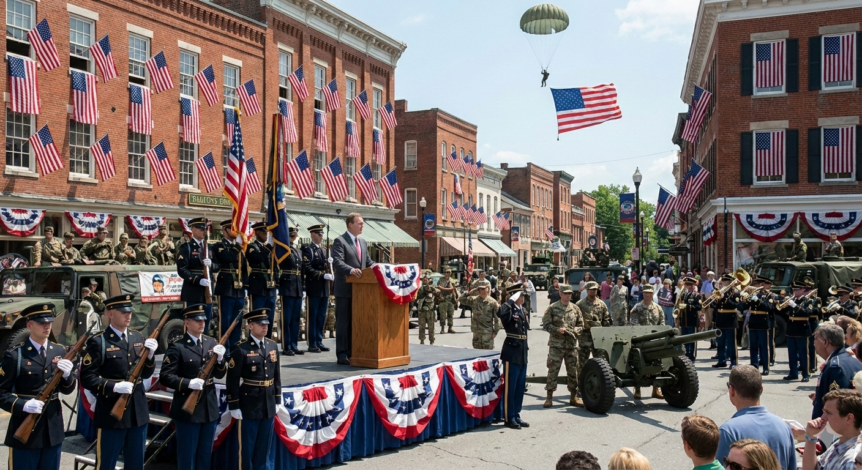
Military customs and traditions are deeply significant, honoring the service, sacrifice, and commitment of those in uniform. Rooted in discipline, unity, and respect, these practices hold profound meaning within the military community. However, when borrowed or misused in civilian contexts—such as scouting events or public ceremonies—their significance is diluted, their solemnity diminished, and their true intent undermined. Here’s why the appropriation of military traditions in civilian settings can be problematic and why it does not necessarily enhance patriotism.
At my request, Gemini created the above “too much” image.
Diluting Meaning and Significance
Military customs are not mere rituals; they embody the ethos of service and sacrifice. Traditions like the folding of the flag or the playing of “Taps” in military funerals carry deep emotional weight for service members and their families. When replicated in civilian events without the same solemnity and understanding, their meaning is lessened, reducing sacred practices to symbolic gestures devoid of their original intent.
Disrespect to Service Members and Veterans
For those who have served, military traditions are personal and deeply respected. When civilian groups adopt military-style ceremonies, ranks, or uniforms without fully understanding their significance, it can appear as trivializing the experiences of those who have earned those honors. For example, scouting groups using military flag-folding techniques without proper context may unintentionally strip the tradition of its deeper meaning.
Undermining Authentic Patriotism
True patriotism is built on respect and understanding, not the superficial adoption of military customs. Simply incorporating military elements into civilian events does not inherently make them more patriotic. In fact, using these traditions out of context can create a performative display of patriotism rather than an authentic appreciation for the sacrifices and values they represent. Honoring military service should involve preserving the integrity of its customs rather than adapting them for civilian purposes.
Risk of Misrepresentation
Misappropriating military customs can lead to the spread of misinformation or misconceptions about military life. Civilian groups using military-style ranks, ceremonies, or symbols without proper knowledge can unintentionally distort their meaning, contributing to a broader misunderstanding of the military experience.
For example:
- Taps. The sounding of the bugle call Taps is addressed in military manuals and it’s for a funeral. Military bases also sound it at 10pm to signal the end of the duty day.
- The Three Volley Salute. Similarly, the firing party, the three to seven uniformed personnel who fire three volleys of blank ammunition from rifles, are also only for a military funeral. This salute is not to be confused with the 21-Gun Salute that is fired from cannons.
- Flag Displays. Please check Army Regulation 840-10 before setting up a display. No one expects you to purchase proper staffs, colors, and stands, unless your display is for a display at a conference where the military is the targeted audience and not just the public.
And yet, 1 and 2 above are performed every single year all around the world, especially on Memorial Day.
Flag Decommissioning
Flag decommissionings are often handled outside the military or formally recognized veteran organizations. The simple act of respectfully placing a worn or tattered flag in a controlled fire, as is the customary method of disposal, seems to be insufficient for some civilians. They then feel the need to add unrelated ceremonial elements, such as sounding Taps or performing a Three-Volley salute, which are honors typically reserved for fallen service members. It essentially evolves into something akin to a grand Viking funeral pyre, which while perhaps well-intentioned, misapplies military tradition.
Read the article: https://thedrillmaster.org/2018/05/31/appropriate-flag-retirement/
It’s important to note that there are no specific regulations or federal laws that mandate such elaborate ceremonies for the retirement of the United States flag by civilians. While organizations like the American Legion and the Boy Scouts of America have established dignified procedures, these are guidelines, not legal requirements, and the addition of military-specific honors in non-military contexts can be a misunderstanding of their original goal.
The Veteran in the Civilian Setting
Many veterans will prosper in civilian life and volunteer to take charge of a local event. Just because you, as a US military veteran, had dealings at one point with a ceremony or two (or even 20), doesn’t mean that the military aspects of your thought process are relevant to the ceremony.
Respectful Alternatives to Honor the Military
Civilians can honor the military in meaningful ways without appropriating its customs. Organizing veteran appreciation events, educating the public on military history, or supporting military families through service projects are respectful alternatives. These approaches demonstrate genuine gratitude while preserving the dignity of military traditions.
Conclusion
While the intention behind using military customs in civilian settings may stem from respect, it is crucial to recognize the boundaries between military and civilian traditions. Military customs carry deep historical and emotional significance, and their misuse can unintentionally diminish their meaning. By finding alternative ways to honor service members, civilians can express true patriotism while upholding the integrity of military traditions.
DeVaughn Simper, Professor Flag, contributed to this article