
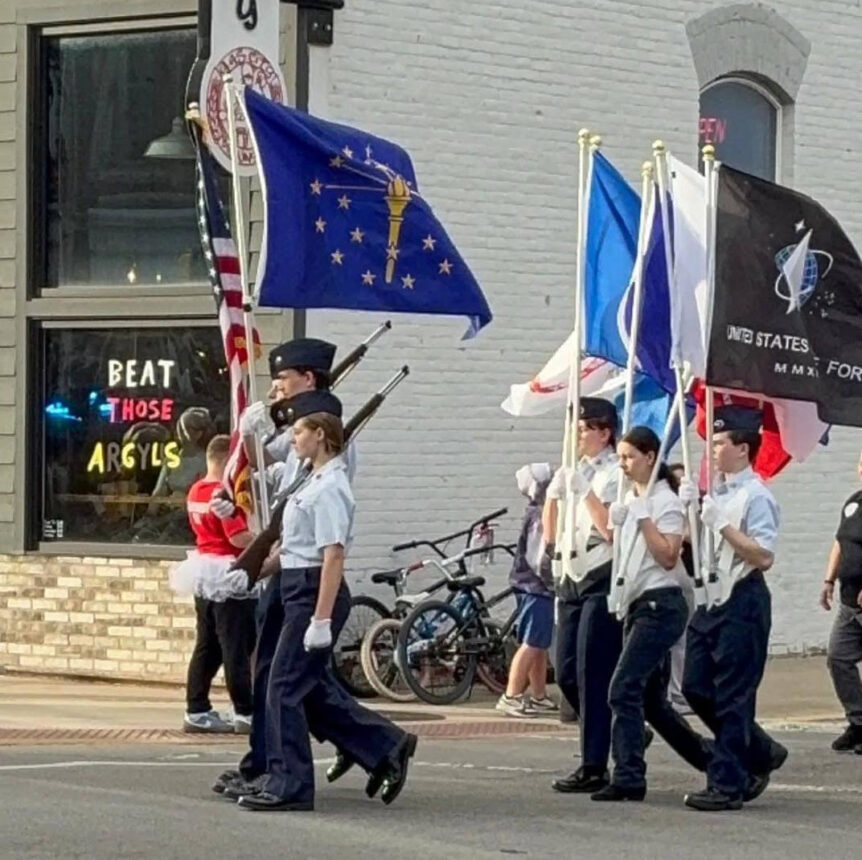
This article evaluates a publicly visible Civil Air Patrol cadet Color guard presentation based on published ceremonial standards, flag protocol, and drill doctrine. The purpose is educational and corrective, not personal. All observations below are based solely on what is visible in the referenced image and applicable regulatory guidance.
Scope and Method
This analysis compares observed practices against recognized authorities, including:
- CAPR 900-2 (Civil Air Patrol Ceremonies and Protocol)
- AFI 34-1201 (Protocol)
- AR 840-10 (Flags, Guidons, Streamers, Tabards)
- U.S. Flag Code
- Established Color guard doctrine and service flag standards
No claims are made regarding private intent, internal decision-making, or individual character.
Cadet Impact — Training, Standards, and Institutional Consequences
Before the negative impact on the National Colors, before the negative impact on the US Air Force, and before the negative impact on the Civil Air Patrol organization as a whole, and the local unit, my primary concern is the negative impact on the cadets.
Leaders, what have you done by allowing this?
Beyond technical noncompliance, the most significant consequence of errors at this level is their impact on cadet development and standards culture.
Cadets learn what is acceptable not from written regulations, but from what adult leaders permit, endorse, or allow to proceed in public. When visibly incorrect equipment, formations, and protocol are presented as official Color guard performance, cadets reasonably infer that:
- Precision is optional
- Compliance is flexible
- Symbolic standards are negotiable
- Public appearance matters more than correctness
This creates a lowered baseline of expectations, where future deviations feel normal rather than unacceptable.
Over time, this dynamic erodes:
- Respect for ceremonial authority
- Confidence in institutional standards
- Motivation to pursue technical excellence
- The instructional value of Color guard participation
The cadets involved are not responsible for these outcomes. The responsibility lies in adult oversight, training structure, and command enforcement. When leadership fails to correct errors before public presentation, cadets absorb the lesson that standards are performative rather than binding.
Color guard duty is meant to teach discipline, accountability, attention to detail, and reverence for national and organizational symbols. When conducted incorrectly — and left uncorrected — it risks teaching the opposite.
Corrective action is therefore not merely about fixing equipment or formations. It is about restoring a culture where cadets learn that standards matter, accuracy matters, and representation carries responsibility.
On Funding “Excuses”
For everyone who will bring up the “excuse” that you do not have the funds, a lack of funding does not justify ignoring ceremonial standards. If you do not have the minimum required equipment, the appropriate response is to decline to perform and budget until you do — not to substitute incorrect materials or present an unauthorized Color guard configuration. Public representation of national, service, and organizational colors requires baseline compliance, and performance should not proceed until those minimum standards are met.
1. Improvised Flagstaffs — Non-Standard Equipment
Observation: Flagstaffs appear to be constructed from PVC or architectural-style poles with decorative finials.
Standard: Ceremonial colors are mounted on purpose-built light ash wood guidon flagstaffs designed for indoor and parade use. Improvised or non-ceremonial staffs do not meet recognized standards.
Significance: Non-standard equipment diminishes the dignity, legitimacy, and formal symbolism of the colors.
2. Improper Flag Type — Outdoor Grommet Flags Used
Observation: The flags are outdoor grommet flags, typically intended for hoisting on halyards.
Standard: Color guards carry indoor/parade flags with a pole sleeve (hem). Outdoor flags with grommets are not designed or authorized for ceremonial carry.
Significance: This constitutes improper flag use and incorrect ceremonial representation.
3. Dual-Flag Carry — Structural Noncompliance
Observation: Individual cadets are wearing two colors harnesses and carrying two flags each.
Standard: Color guard structure assigns one flag per bearer. Dual-flag carry is not anywhere.
Significance: This configuration undermines control, clarity, and accepted ceremonial form.
4. Service Flag Construction — Fringe and Type Requirements
Observation: Air Force-related colors are inconsistent with indoor/parade service color specifications.
Standard: USAF colors must have fringe. USAF colors are colors carried by Airmen, Guardians, and cadets of either service program.
Significance: Incorrect flag type represents a technical deviation from service protocol.
5. Uniform Standardization — Authority and Representation
Observation: Mixed attire is visible, including casual clothing.
Standard: A color guard represents institutional authority and is expected to wear a uniform, authorized, and appropriate ceremonial uniform.
Significance: Uniform inconsistency weakens the formality and credibility of the presentation.
6. Massed Color guard Formation — Precedence and Organizational Structure
Observation: The formation resembles a Massed Color Guard, arranged in two ranks.
Standard: A Massed color guard is not a choice, it must follow specific structural and precedence rules, including:
- Proper hierarchical placement of organizational colors in the front rank
- Subordinate unit colors are positioned in the second rank
Significance: The observed configuration inverts flag precedence, making the service colors carried subordinate to the New York State flag, which conflicts with established protocol.
7. Substitution of State Flag for CAP Organizational Color
Observation: The New York State flag is being carried in place of the required CAP organizational color.
Standard: When CAP presents an official color guard, the CAP organizational or unit color is required. A state flag does not automatically substitute for this role. The unit does not represent the state, it represents CAP.
Significance: This creates a misalignment between organizational identity and ceremonial representation.
Summary Assessment
Taken together, these findings indicate a pattern of ceremonial noncompliance rather than isolated execution errors. The cumulative effect risks:
- Misrepresenting institutional authority
- Improperly displaying national, state, and service colors
- Reversing established flag precedence
- Undermining the educational and symbolic purpose of color guard duty
These observations point to a training, oversight, and procedural gap, not a reflection on individual cadets. Corrective emphasis should be placed on adult leadership, instructor guidance, and doctrinal retraining.
This analysis is based solely on publicly observable conduct and published regulatory standards. It does not assert intent, private deliberation, or personal character, and is offered for educational, historical, and institutional improvement purposes.