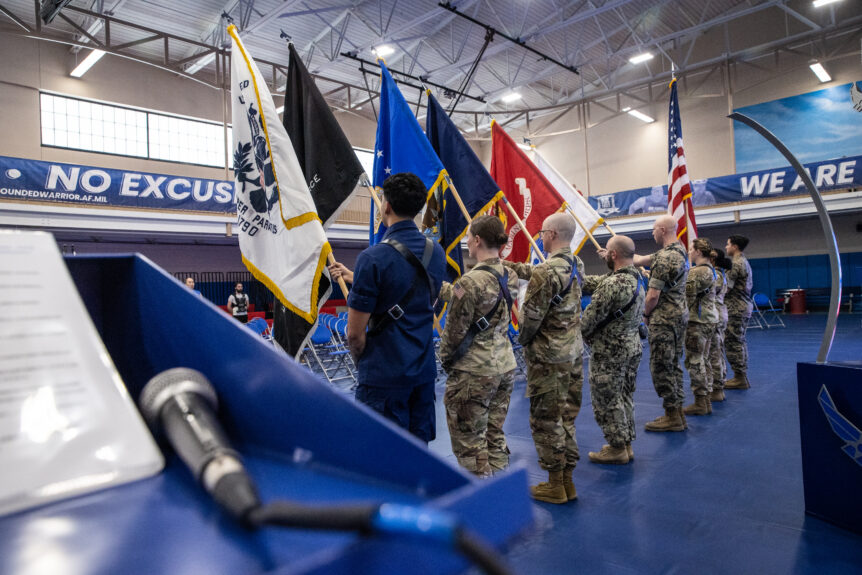
The ‘Good Idea Fairy,’ the destroyer of motivation and crusher of souls, is back, and this time it’s haunting the drill field. As I detail in my previous work, ‘The Magic White Glove Effect,’ this phenomenon is all due to unrealistic expectations. Recently, I received a message detailing a ceremony rehearsal where a prepared junior NCO and his Color Guard …
Case Study: Posting the Colors — CA Military Institute/CA State Guard
This article examines a recent colors presentation conducted by the California Military Institute in support of the California State Guard. As always, the intent here is not criticism for its own sake, but education. By unpacking both strengths and deficiencies, we can clarify standards, improve training outcomes, and reinforce the non-negotiable principles that govern military color guard operations. See the …
A DrillMaster Study of the Flagstaff and Finial
Today’s US military flagstaff, the light ash wood guidon staff with the flat, silver spearhead, comes from a time when polearms were the weapon of choice for infantry and cavalry. The image at the top of the page is a painting by Italian painter Augusto Ferrer-Dalmau called Batalla de Rocroi. The painting was created in 2011, and the battle was …
Symbolic Protection of the Colors
The protection of the “colors” on a military color guard is deeply symbolic, stemming from centuries, even millennia, of military tradition and reflecting core values of honor, loyalty, and the identity of the unit and nation.
Equipment for EMS Color Guards
The Emergency Medical Service (EMS) color guard holds a unique and often unrecognized place in ceremonial traditions. While frequently mistaken for firefighter units due to similar appearances, a closer look reveals their distinct identity: the blue Star of Life on a white background patch. This emblem proudly signifies their life-saving mission.
“Colors” vs “Color Guard” as a Command
Deciphering information in the Army’s TC 3-21.5, Drill and Ceremonies (D&C) can take time and effort because not all passages are written as clearly as one might like. The use of the terms “colors” and “Color guard” are part of this. The Army isn’t alone in this, the other two D&C manuals are just as guilty!
Parading vs Presenting or Posting the Colors
There seems to be confusion on the announcements or commands to present and post the colors. Let’s iron that out.
The Wear of Hats
The issue is that the service drill and ceremonies manuals do not specifically state that a color guard must be covered (wear their headgear: hats, helmets, or berets) all the time when presenting the colors. In this article, I go over the standards of being covered and when we can remove the cover.
Color Guards Overseas and the Foreign National Color
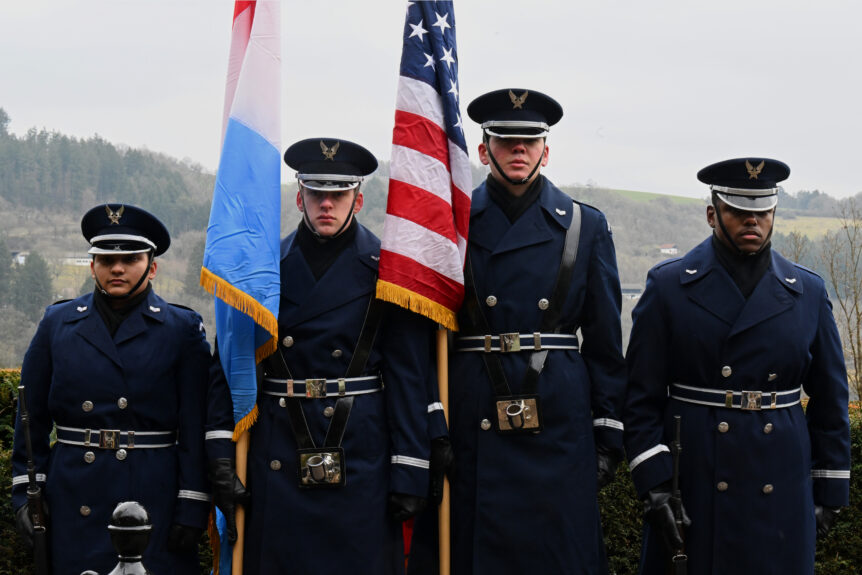
This information affects all bases overseas for all services. A Little History For decades the conventional wisdom has been that when we are overseas, we are told that when we are on US soil (the base, an American cemetery, etc.), the US is on the right and as soon as you step onto foreign soil (outside the gate), you have …
Countermarch For a Five-Man Color Guard?
Let’s talk about Countermarch and the Wheel for a 5-man color guard for the Marine Corps, Navy, and Coast Guard. The Photo at the top of the page shows a color guard with Marine Forces, Europe and Africa, retire the colors during an Assumption of Command Ceremony MarForEURAF at Panzer Kaserne, Stuttgart, Germany. There are big problems in the photo. …