
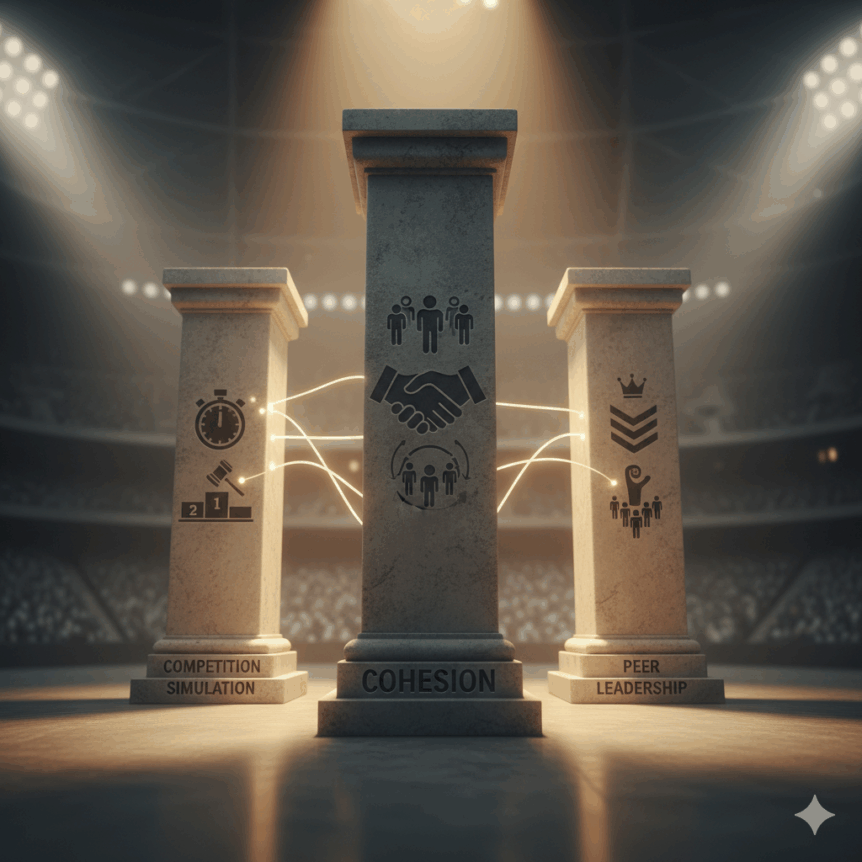
Three powerful concepts—Building Cohesion, Competition Simulation, and Peer Leadership—will build a truly dominant and strong drill team and color guard.
The Three Pillars of a State-Champion Team: Building Drill Team and Color Guard Excellence
Building a championship-caliber performance team—whether it’s a drill team, color guard, or any kind of marching unit—requires more than just sharp choreography and long hours of practice. It demands a culture where commitment, trust, and accountability run deep.
Based on insights from experienced drill team commander David J. Simons and core competitive training principles, success hinges on mastering these three crucial pillars.
David is an alumnus of Benedictine College Preparatory school in Richmond, VA. I have found his friendship and insight to team building invaluable. The first pillar of this article is his concept.
Pillar 1: The Essential Foundation of Team Cohesion
The bonds forged outside of practice are the emotional glue that holds a team together when the competitive pressure is highest. This level of trust and unity is not a byproduct of winning; it is the precondition for winning.
David J. Simons speaks to this essential element:
“I truly believe that teammates who spend time together eating meals, fishing, and playing throwing a ball around are better for having done so. I’ve always strongly encouraged and supported teammates spending this kind of time together. They’re not in combat to build that kind of bond, but school alone does not afford enough time to build that kind of cohesion, and it is a crucial part of building a team. Too often it’s overlooked, or instructors simply don’t have that kind of time to invest.”
In our text conversation, I replied:
“My team and I did all kinds of things together every week. We constantly had get-togethers at my house, going bowling, and just hanging around. We were a strong bunch, and it showed in our performances. For my four years on the team, we were state champs. That’s the kind of time it takes to build a team. It doesn’t happen overnight, and it doesn’t just happen at practices.”
When teammates are friends who genuinely care about each other, they develop the accountability necessary to push through difficult training and correct each other’s errors with mutual respect.
Pillar 2: Practice with Purpose—Simulating the Competition Deck
Once the trust is established, the team must translate its cohesion into flawless execution. The most effective way to bridge the gap between rehearsal and performance pressure is to practice as if you are actively being judged.
This approach demands that every rehearsal be conducted with the atmosphere, intensity, and strict standards of a competition.
Keys to Competition-Simulation Practice:
- Integrate “Judge Breaks”: Immediately after running a full routine, have an instructor or a designated advisor or cadet deliver performance feedback using official score-sheet terminology. This trains the team to think like a judge and prioritize the standards they will be scored on.
- Embrace the “One-Shot” Mentality: Eliminate the phrase “Stop! Let’s run it again.” Once the routine starts, it is treated as a one-shot performance. If a mistake is made, the team must continue, finish the routine, and practice their recovery without breaking formation or character. This builds the mental resilience needed on competition day.
- Full Uniform Runs: Rehearse the routine in full uniform before the actual event. This helps the team adjust to the feel of the fabric, the wear of the hat, the weight of the equipment, and any minor physical restrictions that the uniform might introduce.
By holding the team to judgement-level precision in practice, you ensure that the actual competition environment feels like a familiar performance space, not a pressure cooker.
Pillar 3: Delegated Ownership and Peer Leadership
A team is truly strong when success doesn’t depend solely on the coach or instructor. The most dominant teams are those where leadership and accountability are effectively delegated to the student commanders and captains.
This structure empowers the team to solve problems in real-time and fosters an unwavering sense of ownership over the final product.
Empowering Peer Coaches:
- Relatable, Real-Time Feedback: Peer leaders, having just performed alongside their teammates, can spot subtle, energy-based errors (a lack of facial expression, a slightly late turn, a drop in intensity or energy) that an instructor watching from the side might miss. This feedback, coming from a peer, often lands with greater impact. (This is why I march with teams inside the formation to get a feel for what is happening.)
- The Commander as Standard Bearer: The commander’s role shifts from merely leading drill to ensuring the standards of the coach are maintained when the coach is not actively involved. They become the chief enforcers of discipline and the “practice like you’re judged” philosophy.
- Fostering Long-Term Growth: Giving student leaders the authority to run warm-ups, manage sectionals (a musical ensemble term that can apply to any marching team- it’s an element of the team that can practice on their own), and give critical feedback develops future leaders for the program, ensuring its sustainability and continued success.
When the commander’s voice carries as much weight in practice as the instructor’s, the team has achieved the highest level of internal discipline and self-sufficiency, ensuring peak performance on the competition area.