
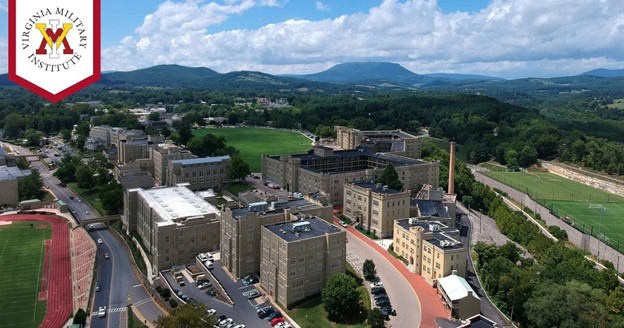
Across the United States, historic military schools and colleges are increasingly misunderstood, marginalized, or targeted for closure. Too often, they are dismissed as relics of the past—out of step with modern education or unnecessary in a professional volunteer force.
That assessment is not just wrong. It is dangerous.
Military schools were never created as cultural artifacts or elite curiosities. They were established as national leadership institutions, designed to produce disciplined citizens, ethical leaders, and individuals capable of functioning under authority and responsibility when it matters most. Their erosion represents a quiet but serious loss of national capacity—one whose consequences will not be fully visible for years.
Click here to download the DrillMaster White Paper, The Strategic Necessity of America’s Historic Military Schools and Colleges: Leadership Formation, National Resilience, and the Consequences of Institutional Erosion, an extension of this article.
Why Military Schools Were Created
From the early 19th century onward, the United States faced a problem unique among nations: how to produce competent leaders without relying on aristocracy or hereditary privilege. Military schools emerged as the solution.
These institutions offered a merit-based system where discipline, character, and performance—not social class—determined advancement. They educated not only future officers, but engineers, educators, public servants, law enforcement leaders, and civic figures. Just as importantly, they served populations often neglected elsewhere: rural communities, working-class families, and first-generation students.
Military schools were engines of character formation, not merely credentialing.
Drill and Ceremonies: Leadership, Not Pageantry
Central to this mission was Drill and Ceremonies.
Contrary to modern caricature, drill was never about aesthetics or nostalgia. It functioned as a deliberate leadership methodology. On the drill field, cadets learned to follow before they led, to command peers with clarity rather than ego, and to enforce standards they did not invent but were obligated to uphold.
Drill teaches lessons that cannot be replicated in a classroom:
- Authority exercised without coercion
- Decisions made under time pressure
- Responsibility for others’ performance
- Emotional control under scrutiny
- Acceptance of correction without resentment
This is embodied leadership education—visible, immediate, and accountable.
When Theory Became Reality: VMI in the Civil War
The most powerful demonstration of this system came in 1864.
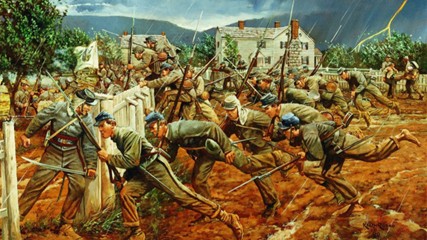
During the American Civil War, the Corps of Cadets of Virginia Military Institute were ordered into active combat service. These were students, many still teenagers—not professional soldiers. Yet they were mobilized as a formed unit because they were already trained to function as one.
At the Battle of New Market, the cadets were committed at a decisive moment to close a gap in the line. Advancing under artillery and small-arms fire, they maintained formation, followed orders, and absorbed casualties without breaking. When color bearers fell, others immediately stepped forward—not from impulse, but from doctrinal understanding of duty and formation integrity.
Ten cadets were killed. Many more were wounded. The unit held.
This outcome was not the product of heroism alone. It was the result of daily discipline, drilled leadership, and enforced standards.
Not an Anomaly—A System
Critics sometimes argue that VMI was a one-time exception. History says otherwise.
Cadets from Virginia Tech were also called into service during the Civil War and organized for potential employment, though ultimately not committed due to changing operational conditions. The Corps of Cadets at The Citadel were similarly engaged in defensive duties and maintained readiness for combat use.
The key point is this: multiple military schools were viewed as viable, immediately employable leadership reserves. That only one was ultimately committed reflects the contingencies of war—not the uniqueness of preparation.
Military schools were designed to be ready before they were needed.
What We Lose When These Schools Are Undermined
As military schools close or are stripped of their core leadership methodologies, the losses compound quietly:
- Fewer leaders trained early to accept responsibility
- Greater strain on accession and professional training systems
- Weaker civil–military understanding
- Reduced upward mobility for non-elite populations
- A culture increasingly uncomfortable with authority, standards, and accountability
Leadership cannot be improvised at age 30 if it was never demanded at age 15.
A National Asset Worth Defending
Military schools are not interchangeable with civilian institutions that happen to wear uniforms. Their value lies in what they demand daily, not what they symbolize. Drill and Ceremonies—properly taught and enforced—remain one of the most effective leadership laboratories ever devised.
The historical record is clear: when the nation needed disciplined leadership immediately, it turned to institutions that had already done the work of formation.
To dismantle or politicize these schools is not modernization. It is strategic amnesia.
A free society depends on citizens capable of discipline, restraint, and responsibility. America’s historic military schools have produced such citizens for generations. Preserving them is not about the past—it is about whether we intend to have leaders ready for the future.