

In the somber process of bringing home our fallen servicemembers, every detail matters. The sight of a flag-draped casket signifies part of the highest honors a nation can bestow. However, a modern logistical trend is starting to undermine that dignity: the practice of draping the interment flag over the shipping container holding the casket, rather than the casket itself.
The shipping container or air tray is not to be confused with the military transfer case, which is a military casket used to ship remains of fallen servicemembers from overseas to Dover Air Force Base.
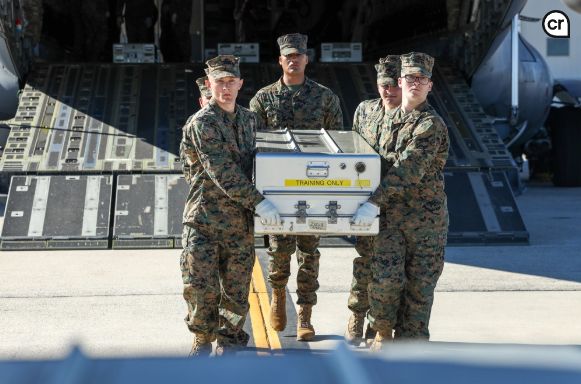
I have observed and documented time and again instances where a casket, secured inside a shipping container, was being loaded onto an aircraft—with the American Flag on top of the container.
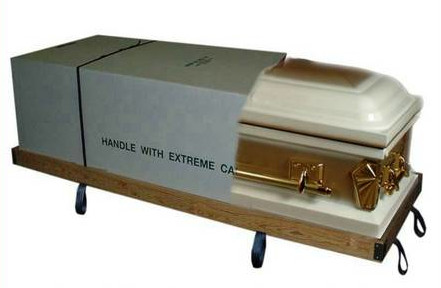
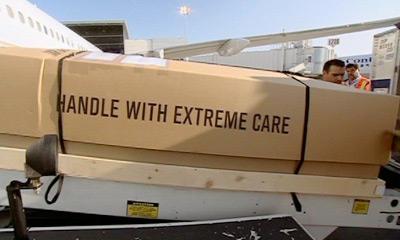
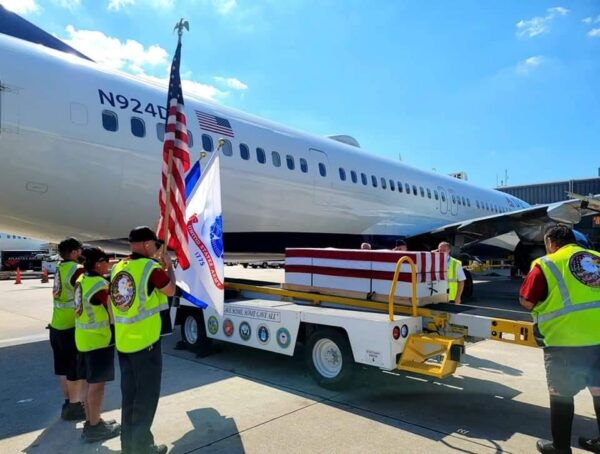
While logistics companies must use secure means to protect the casket during transport, draping the container with the flag is an error in military honors protocol and violates the spirit and letter of the U.S. Flag Code (Title 4, Chapter 1).
The Integrity of the Flag and Protocol Violations
The American Flag used for interment honors is intended solely for one sacred purpose: to drape the casket of the deceased service member (note: all Americans may have a flag on their casket), physically representing the nation’s respect and gratitude. The casket is the solemn centerpiece of the transfer, not just the contents of a shipment. When the flag is placed over the sealed, outer shipping container, two critical violations occur:
- Improper Draping (The Purpose Violation): The fundamental protocol requires the flag to drape the casket itself. Draping it over a shipping container, which is classified as commercial transport equipment, misuses the symbol and deviates from the intended honorific practice (consistent with 4 U.S.C. § 8(c)1, which restricts flags from covering anything but the casket). The flag honors the hero, not the vessel carrying the remains.
- Risk of Soiling and Damage (The Integrity Violation): A core principle of the Flag Code is that the flag should not be placed in a situation where it can be easily soiled or damaged (consistent with the spirit of 4 U.S.C. § 8(e)2, which states the flag will not be displayed in a manner where it can be easily torn, soiled, or damaged). Placing the flag on the exterior of a container—exposed to the elements and subject to friction and industrial grime during loading—is a direct failure to safeguard the flag’s integrity.
1 2 https://thedrillmaster.org/2025/11/23/the-text-of-the-flag-code/
Why Protocol Falters: Honor by Dishonor
The underlying cause of this recurrent violation is not malicious intent, but rather a gap between respect and detailed knowledge, which I call “Honor by Dishonor.”
First, there is an understandable human instinct to “do more.” The desire to visually honor the transfer process leads individuals to place the flag on the large, visible object (the container) to ensure the fallen hero is recognized at every stage. This is a sincere act of reverence that is unfortunately misinformed, resulting in a violation rather than an increase in honor.
Second, the personnel, particularly the honor guard members involved in moving these containers, often suffer from severe deficits in detailed protocol training. They are trained to execute the physical tasks of moving the remains but often lack the deeper understanding of the “why” and the associated rules of the flag protocol. When faced with a logistics container instead of a casket, they don’t recognize the difference because they are not trained in the nuanced standards for this specific method of transport.
Protocol vs. Sentiment: Upholding the Standard of Honor
A common defense for these unauthorized actions is the misguided appeal to “feelings”—the idea that compromising standards somehow offers more respect to the grieving family. This creates a false and damaging dichotomy, suggesting that protocol and compassion are mutually exclusive.
The truth is the opposite: the Flag Code and military manuals were developed to define the highest, most respectful standard of care. These procedures are the codified expression of the nation’s gratitude, specifically designed to protect the dignity of the fallen and provide proper structure for the family’s grief.
Individuals compromise established standards and justify their actions based on their personal emotional inclination and often attempt to frame those who enforce protocol as “anti-family” or “uncaring.”
This is called “deflection”, a conversational tactic used to redirect focus, blame, or criticism away from oneself or the core issue being discussed. It’s used as a personal attack so the attacker can feel morally justified and superior even though their argument doesn’t make a bit of sense.
Upholding the standard of honor is the most respectful act possible. Allowing sentimentality to override regulations only introduces disorder and compromises the very dignity the standards were meant to protect. Our goal must be adherence to the highest standard, not emotional improvisation.
A Call for Immediate Correction and Institutional Oversight
This is not simply about being pedantic; it is about ensuring that those who died protecting our nation are given the uncompromising dignity they are owed, every single step of the way home. The logistics of military remains transfer must support, not undermine, the reverence of military honors.
Correcting this systemic failure requires action from two fronts:
- SOP Revision: Logistics providers must immediately revise company Standard Operating Procedures (SOPs) to explicitly forbid placing the flag over any container.
- Mandatory Education: The Department of Defense (DoD) and its military branches must enforce comprehensive, mandatory protocol education for all personnel involved in the chain of custody, including airline personnel, logistics company staff, and funeral home representatives.
- We must ensure that our handling of the flag reflects the solemnity and honor due to the service member it covers. Let us commit to upholding the dignity of the transfer, ensuring the flag only rests where it is meant to: over the container directly holding the remains of an American servicemember.